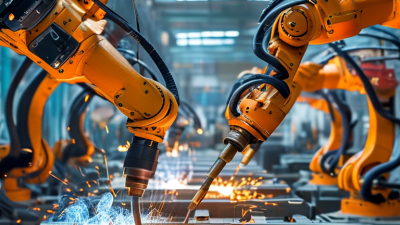
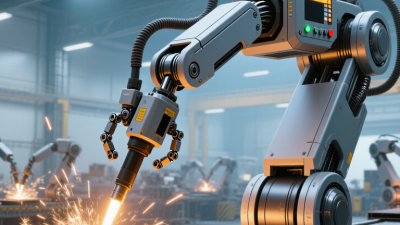
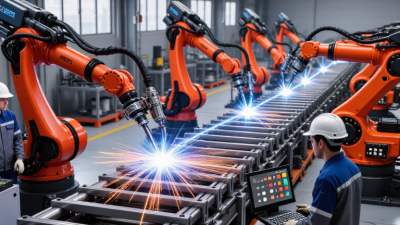
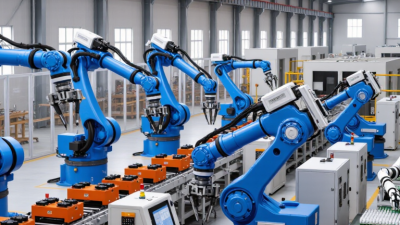
Automated welding robot systems are moving from large automotive plants into smaller fabrication shops, shipyards, and structural steel facilities. A modern cell may include a six-axis robot, wire feeder, positioner, seam tracker, and guarded work area. These components must work together under heat, spatter, vibration, and changing joint conditions. The best supplier is rarely the one offering the lowest robot price.
The International Federation of Robotics reported 541,302 industrial robots were installed worldwide in 2023. It also recorded more than 4.28 million robots operating globally. These figures show strong automation demand, but they do not guarantee welding performance. Arc stability, torch accessibility, programming software, payload capacity, and local technical support still determine daily productivity. The International Federation of Robotics’ World Robotics 2024 report provides useful market context, while market studies from Research and Markets indicate continued growth in robotic welding equipment through this decade.
This guide examines seven leading automated welding robot suppliers worldwide. The comparison considers robot reliability, welding-package compatibility, system integration, training, maintenance response, and industry experience. Suppliers serving automotive production may not suit a low-volume steel fabricator. That distinction matters.
The ranking is not absolute. Regional service quality can change the buying decision. Installation records can also matter more than marketing claims. Readers should verify cycle-time data, warranty terms, safety certification, and references from similar facilities. A robot that looks impressive at a trade show may struggle beside a real welding fixture. That is worth remembering.
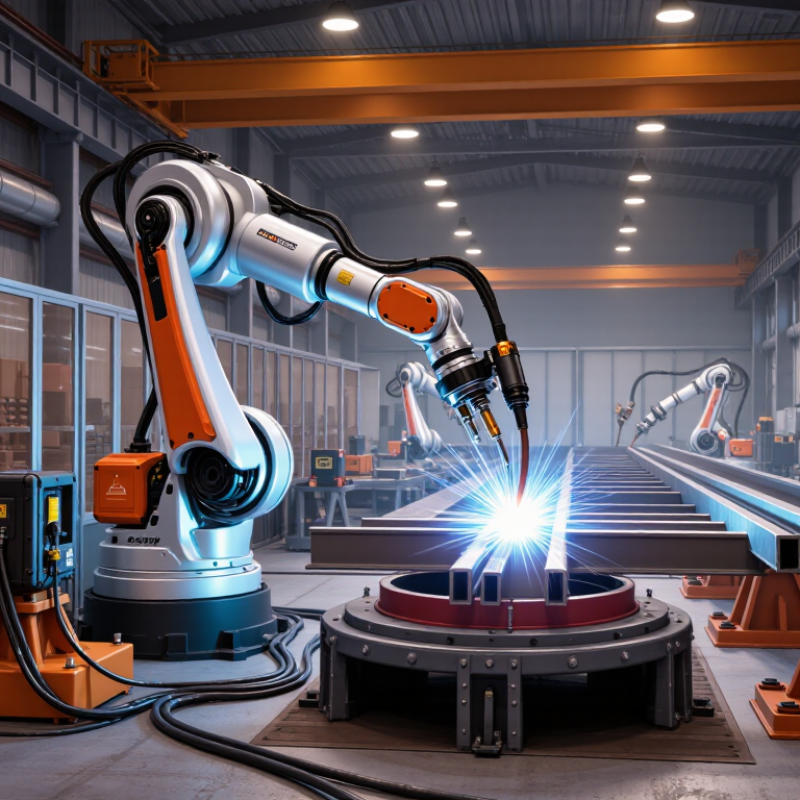
Understanding automated welding robot suppliers requires more than comparing arm speed or advertised payload. The International Federation of Robotics reported 541,302 new industrial robots installed worldwide in 2023. Its World Robotics 2024 report also recorded about 4.28 million robots operating globally. These figures show strong automation demand, but they do not guarantee welding performance. Suppliers should demonstrate arc stability, torch access, fixture accuracy, and repeatable weld quality on real workpieces.
Ask whether the supplier provides complete integration, not only the robot. A dependable partner should support welding power sources, positioners, sensors, programming, operator training, and preventive maintenance. Request sample welds using your steel grade, joint design, and production cycle. Review documented uptime, spare-part response, safety validation, and software support across regions. According to IFR data, global robot density reached 162 units per 10,000 manufacturing employees in 2023, increasing the need for skilled integration and supervision.
The cheapest quotation can become expensive. Hidden costs often include fixture redesign, programming hours, shielding-gas losses, and production stoppages.
Not always.
A supplier may offer impressive demonstrations but weak after-sales coverage. I would score technical fit, service reach, training quality, and lifecycle cost separately. Then test a small production cell before approving a larger rollout. This approach is less glamorous, yet it exposes practical weaknesses early.
Choosing an automated welding robot requires more than comparing speed or purchase price. The strongest manufacturers offer systems matched to your materials, joint designs, and production volume. Check payload, arm reach, positioning accuracy, duty cycle, and torch compatibility. A robot that performs well on a test plate may struggle beside a narrow fixture.
Programming is another important comparison point. Look for offline simulation, easy path editing, seam tracking, and reliable sensor feedback. Operators should adjust a weld after a small design change without calling a specialist every time. Integration also matters. Review communication protocols, fixture interfaces, safety controls, and data collection options. Ask for documented cycle-time tests using parts similar to yours, not ideal samples. Real production is rarely perfect.
Tips: Request customer references from comparable factories. Inspect service response times, spare-parts availability, training depth, and warranty terms. Calculate total ownership costs, including calibration, software updates, consumables, and downtime. Do not overlook safety certification and risk-assessment support. A lower quotation can become expensive after installation. Also, challenge optimistic claims. Your team should witness repeatability tests, inspect weld consistency across several shifts, and record failure points. One detail is easy to miss: operator acceptance. If the interface feels confusing, adoption may remain slow, even with excellent hardware.
| Supplier Profile | Primary Market Region | Typical Robot Payload | Typical Horizontal Reach | Repeatability Class | Welding Processes Supported | System Integration Capability | Safety & Compliance Options | Service & Support Coverage | Best-Fit Applications | Overall Comparison Rating |
|---|---|---|---|---|---|---|---|---|---|---|
| Supplier Profile A | East Asia and global export markets | 6–20 kg | 1,400–1,800 mm | Approximately ±0.08 mm | MIG/MAG TIG Spot | Strong; supports positioners, seam tracking, PLC interfaces and production-line communication | Safety fencing, door interlocks, emergency stops and risk-assessment documentation available | Regional distributors with international technical support | General fabrication, steel frames, agricultural equipment and medium-volume production | ★★★★☆ |
| Supplier Profile B | Western Europe and North America | 8–25 kg | 1,600–2,100 mm | Approximately ±0.06 mm | MIG/MAG TIG Laser-ready | Very strong; extensive robot-cell engineering, offline programming and traceability integration | Designed for CE- and ISO-aligned industrial safety systems, with guarding and monitoring options | Established local integrator and service networks | Automotive components, heavy machinery, repeatable multi-shift production | ★★★★★ |
| Supplier Profile C | Japan, Southeast Asia and international markets | 3–12 kg | 1,000–1,700 mm | Approximately ±0.05 mm | MIG/MAG TIG Spot | Strong; precise motion control, arc monitoring and coordinated positioner operation | Comprehensive guarding, teach-pendant controls and safety-rated monitoring options | Broad global network, with strong application-engineering capability | Precision assemblies, electronics enclosures, automotive parts and compact workpieces | ★★★★★ |
| Supplier Profile D | North America and Latin America | 10–30 kg | 1,700–2,400 mm | Approximately ±0.10 mm | MIG/MAG Flux-cored Spot | Strong; suitable for large fixtures, dual-station cells, conveyors and weld-quality monitoring | Industrial guarding, interlocks, light curtains and safety PLC integration available | Good local support in major manufacturing regions | Heavy equipment, structural steel, trailers and large welded assemblies | ★★★★☆ |
| Supplier Profile E | Central Europe and the Middle East | 5–16 kg | 1,300–2,000 mm | Approximately ±0.08 mm | MIG/MAG TIG Plasma-ready | Strong; modular cells, digital production monitoring and integration with common industrial networks | CE-oriented cell design, guarding, emergency circuits and safety validation support | Reliable regional integrator coverage and retrofit support | Contract manufacturing, metal furniture, machinery frames and batch production | ★★★★☆ |
| Supplier Profile F | China and rapidly expanding export markets | 6–20 kg | 1,400–2,000 mm | Approximately ±0.08–0.12 mm | MIG/MAG TIG Spot | Moderate to strong; standard cells are widely available, while advanced integration depends on the integrator | Safety fencing, interlocks, emergency stops and light curtains commonly available | Strong domestic coverage; international support varies by destination | Cost-sensitive fabrication, standard brackets, frames and medium-volume welding | ★★★★☆ |
| Supplier Profile G | Global markets with strong European and Asian presence | 4–15 kg | 1,200–1,800 mm | Approximately ±0.07 mm | MIG/MAG TIG Collaborative-ready | Strong; flexible cells, vision options, seam tracking and quick-change tooling support | Risk-assessment support, guarded cells and selected collaborative operating modes | Growing international network, with remote diagnostics offered on selected systems | Small-batch manufacturing, job shops, varied part families and flexible automation | ★★★★☆ |
Note: Figures represent realistic comparison ranges for industrial arc-welding robot systems and are intended for initial supplier screening. Actual payload, reach, repeatability, compliance documentation, integration scope and service availability depend on the selected robot model, welding package, cell design and local integrator.
The seven notable suppliers represent different strengths: global integration, heavy fabrication, automotive cells, collaborative welding, software, regional service, and custom engineering. Buyers should inspect more than robot speed. A reliable supplier must prove arc stability, fixture repeatability, torch access, and recovery after a failed weld. On a production floor, a two-second delay can affect an entire shift.
The International Federation of Robotics reported 541,302 industrial robots installed worldwide in 2023.
Its World Robotics 2024 report also recorded about 4.28 million robots operating globally.
These figures show strong automation demand, but they do not guarantee welding quality. Fortune Business Insights estimated the welding robots market at USD 8.53 billion in 2023. It projects growth to USD 16.76 billion by 2032. The estimate is useful, though market forecasts can change quickly.
A practical supplier review should include a live weld trial using the buyer’s steel grade, joint design, and wire specification.
Ask each supplier to document cycle time, defect rates, training hours, and local spare-parts coverage. Poorly designed fixtures remain a common weakness. So does limited programming support. A supplier may offer impressive equipment, yet struggle with mixed-batch production. That gap deserves attention.
Experienced teams should also test fume extraction, seam tracking, offline programming, and safe operator access before signing a contract.
Leading automated welding suppliers now combine robotic arms with precise motion control, seam tracking, and real-time quality monitoring. These technologies support MIG, MAG, TIG, laser, and resistance welding processes. Each method fits different materials, joint designs, and production speeds.
Automotive plants often use robotic cells for body frames, battery trays, and exhaust components. Heavy equipment manufacturers need longer arms, stronger fixtures, and controlled heat input for thick steel. Shipyards and rail workshops benefit from synchronized robots that weld large panels with fewer repositioning steps. Energy equipment producers require detailed weld records for pressure vessels, pipelines, and structural assemblies.
Vision systems can locate joints when parts shift slightly. Laser sensors can follow uneven seams. Digital twins help engineers test reach, cycle time, and collision risks before installation. Collaborative robots suit smaller workshops because they need less floor space and support flexible production. Still, automation is not effortless.
In production audits, poor fixture alignment remains a common weakness. A camera may detect a seam but miss contamination, distortion, or an unstable arc. I would not judge a supplier by robot speed alone. Training, service response, spare-part planning, and weld procedure control matter just as much. Some systems promise easy deployment, yet operators may need weeks of practical adjustment. That gap deserves honest attention.
The chart compares major automated welding technologies by the number of common industrial sectors in which they are widely deployed. MIG/MAG and resistance spot welding have the broadest industrial coverage, while laser and submerged arc welding are more specialized for precision or heavy fabrication.
Choosing the right automated welding robot supplier starts with your production reality, not a glossy catalog. Review the seven leading suppliers against weld type, material thickness, cycle time, and available floor space. A system for small steel brackets differs greatly from one handling heavy frames. Ask for a sample weld using your actual parts. The bead profile, spatter level, and repositioning time reveal more than a sales presentation.
Check the supplier’s engineering experience. Can its team integrate fixtures, sensors, safety controls, and existing production software? Request documented case studies from similar industries, not generic success stories. Study maintenance response times, spare-parts availability, operator training, and remote-support limits. A low purchase price may become expensive when one failed torch stops a cell for three days.
Factory acceptance testing deserves attention. Measure arc time, loading time, defect rates, and changeover performance under realistic conditions. Also examine programming methods; a skilled operator should adjust a job without waiting for outside technicians. No supplier is perfect. I would question any promise of zero defects or instant payback. Your own production data may be incomplete, and that can weaken the comparison. Leave room for pilot testing, realistic labor assumptions, and future product changes.