Who Are the Top Robotic Systems Manufacturers in China?
China has become a major force in industrial automation, but “top” depends on what a buyer needs. A factory assembling electric vehicles has different priorities from a laboratory handling delicate samples. Both may need robotic systems, yet their requirements for payload, precision, software, and service can differ sharply.
The International Federation of Robotics offers useful context. Its president, Marina Bill, said, “China remains the world’s largest market for industrial robots, accounting for 52% of global installations in 2022.” That figure highlights the market’s scale, not the quality of every supplier. Companies such as Siasun, Estun, Inovance, Efort, and Dobot operate across different segments, from industrial arms to collaborative and service robots. Their products should not be treated as interchangeable.
A practical comparison looks beyond glossy demonstrations. Can a robot repeat a small movement accurately over a full shift? Are spare parts available nearby? Does the control software connect smoothly with existing equipment? These details matter on a real production floor, beside conveyors, safety barriers, and technicians troubleshooting a stopped line. This overview will examine manufacturers through product range, technical capability, application experience, and support. Those measures are helpful, but not perfect; public information can be uneven, and performance depends on the installation. A shortlist is only a starting point.
What Robotic Systems Manufacturers Do in China
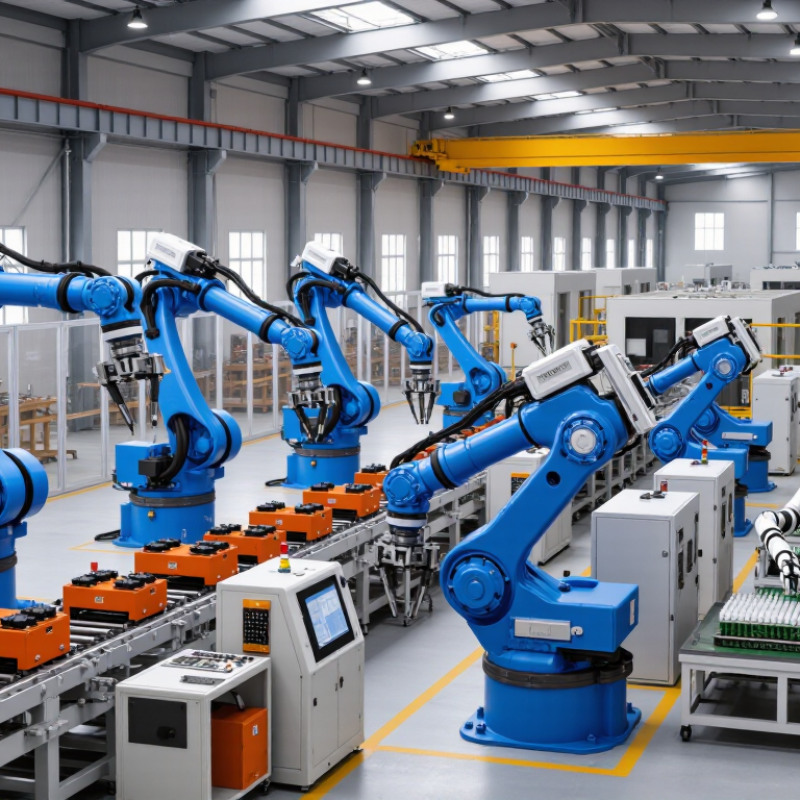
Robotic systems manufacturers in China do more than build robot arms. They combine mechanical design, controllers, sensors, grippers, and software into working production systems. A typical installation might move metal parts from a conveyor, check dimensions with a camera, and place accepted pieces into a machining station. Manufacturers also adapt reach, payload, and cycle time to a customer’s actual floor layout. The details matter.
The International Federation of Robotics reported 276,288 industrial robot installations in China in 2023, representing 51% of global installations, in its World Robotics 2024 report. That scale makes integration and after-sales support important parts of the work. Teams may configure motion paths, connect robots to existing production equipment, train operators, and troubleshoot faults after commissioning. A successful demonstration is not enough. Dust, changing product batches, and awkward access can expose design weaknesses that were missed in planning.
Manufacturers also need to document maintenance needs and help customers assess safety risks around shared work areas. These decisions affect uptime, not just installation speed. Some projects still require considerable adjustment after the first production run; that is worth acknowledging. A system that works only under ideal conditions has not yet proved itself.
How China’s Robotics Manufacturing Sector Is Organized
China’s robotics sector is better understood as a layered manufacturing network than a list of machine makers. Upstream firms supply servo motors, reducers, controllers, sensors, and precision parts. Robot manufacturers assemble these into articulated arms, mobile platforms, or specialized machines. System integrators then connect equipment to conveyors, cameras, safety devices, and factory software. Their work often determines whether a robot can handle a real production task.
Scale is substantial. The International Federation of Robotics’ World Robotics 2024 report records 276,288 industrial robot installations in China during 2023, about 51% of global installations. That demand supports a broad base of domestic production and integration, while also drawing on imported components and technical expertise. On a factory floor, the boundary between maker and integrator can blur: one team may tune a gripper beside a running assembly line, then troubleshoot its vision system. Not a tidy chain. The structure varies by application, and supplier capacity alone does not guarantee stable performance. Commissioning, maintenance access, and worker training can be less visible, yet they shape whether a system keeps producing after installation.
Leading Robotic Systems Manufacturers in China
China’s robotic systems manufacturers serve factories that need repeatable motion, steady output, and safer material handling. Their work can include robot arms, controllers, grippers, machine vision, and integration with existing production lines. A capable supplier should explain how these parts work together, not just list equipment.
Look for engineering evidence that matches the intended task. Ask how a system handles the actual part, including its weight, surface, and position tolerance. A gripper that works on a clean sample may slip on oily components. Request a cycle-time estimate, but confirm it with a live trial using representative materials. Details matter.
Reliable manufacturers also document installation, operator training, maintenance, and spare-part support. Check whether technicians can diagnose faults from clear alarm records and whether safety functions are tested during commissioning. A tidy demonstration is useful, but it does not prove long-term uptime. Production conditions are messier. Dust, temperature changes, and uneven part flow can expose weaknesses that a showroom test misses.
Comparisons between suppliers can be imperfect because system scope varies: one quote may include vision and integration, while another covers only the robot. Ask for a written breakdown and measurable acceptance criteria. Even then, some risks remain. A careful site assessment and realistic pilot run offer better evidence than broad claims about speed or precision.
China’s Industrial Robot Installations, 2018–2023
Annual installations rose sharply in 2021 and reached a high in 2022, before easing in 2023. These figures show market activity, not the output or market share of individual manufacturers.
Source: International Federation of Robotics (IFR), World Robotics reports. Figures are units installed.
What Sets These Manufacturers’ Products and Capabilities Apart
Chinese robotic systems manufacturers differ less by robot appearance than by how well machines fit real production lines. Some specialize in articulated arms for welding, while others build integrated cells for palletizing, machine tending, or electronic assembly. A useful comparison looks beyond payload and reach. Ask how the system handles uneven parts, changing product sizes, and dusty shop floors. Those details can determine whether a robot runs steadily or needs frequent adjustment. Small details matter.
Capabilities also depend on vision, grippers, motion software, and integration with existing equipment. A well-designed cell may include guarded work zones, clear operator controls, and recovery steps for common faults. Yet an impressive demonstration does not prove reliable performance across a full shift. Request cycle-time data from a comparable task, and check what support is available after installation. Response times and spare-part access deserve attention. No manufacturer excels at every application, and customization can add cost or complexity. Buyers should test practical requirements, not just polished presentations. That distinction is easy to miss.
How to Compare Chinese Robotic Systems Manufacturers
Who Are the Top Robotic Systems Manufacturers in China?
Comparing Chinese robotic systems manufacturers takes more than matching a quoted price to a payload rating. Start with the job: note the part’s weight, required reach, cycle time, and working conditions. Ask for test results using a similar part and tool. Numbers can mislead. A fast demonstration may not reflect a full shift or frequent product changes.
Tips: Request a sample-cell trial. Watch the robot pick, place, and recover from a stop. Check cycle consistency, positioning accuracy, and how easily operators can change a program. Get the test conditions in writing.
Compare the complete system, not only the arm. Review controller functions, gripper compatibility, safety features, installation scope, training, and spare-parts availability. Ask who handles commissioning and how quickly technical support responds. Inspect manuals and maintenance schedules; unclear documentation can slow a capable team. If possible, speak with a customer using a similar process. One detail is easy to miss: floor layout, cable routing, or an awkward service point can add real costs. A pilot project helps reveal gaps before wider deployment, though it may not capture every production issue.