Accordian Closable

10 Best Robotics Projects for Businesses Worldwide?

Businesses worldwide are moving robotics from trade-show demonstrations into warehouses, hospitals, farms, and production floors. This shift creates practical opportunities, but it also exposes expensive weaknesses in planning. The best robotics projects are not always the most advanced. They are the projects that solve measurable problems, fit existing workflows, and earn employee trust.

This guide examines ten robotics projects across different industries and operating environments. Examples include autonomous mobile robots moving cartons, robotic arms inspecting components, and agricultural machines monitoring crops under changing weather. Each project deserves careful evaluation through labor impact, maintenance demands, cybersecurity, energy use, and expected return on investment. Small pilot programs can reveal whether a robot handles narrow aisles, uneven lighting, or unpredictable human movement. Real conditions matter.

Results can vary.

A system that succeeds in a controlled factory may struggle in a busy retail facility. Vendor promises may also overlook integration costs, staff training, and replacement parts. That uncertainty should not be hidden. Responsible decision-makers compare performance data, safety documentation, service support, and relevant industry requirements before committing capital. They also involve operators who understand daily bottlenecks better than a sales presentation.

These robotics projects are presented as adaptable starting points, not guaranteed solutions. Some will require redesign after testing. Others may deliver value only when paired with process changes. A thoughtful robotics strategy accepts those imperfections, measures outcomes honestly, and improves through evidence rather than enthusiasm.
10 Best Robotics Projects for Businesses Worldwide?

Defining the Criteria for Selecting Business Robotics Projects

Choosing the best robotics project begins with a measurable business problem, not impressive hardware. In pilot reviews, teams should record task time, error rates, injury risks, and labor requirements. A warehouse robot might reduce walking by three hours per shift. That detail matters more than a polished demonstration.

Feasibility must be tested in the real workplace. Examine floor conditions, lighting, network coverage, payload limits, and worker movement. A project should connect with existing software and require manageable training. Security, privacy, maintenance, and regulatory duties also need documented controls. Ask who responds when the robot stops at 2 a.m. Reliable support is part of the project, not an optional service.

Financial value needs a cautious model. Include installation, integration, energy use, repairs, downtime, and staff retraining. Compare these costs with realistic gains over several years. The first estimate is often wrong. A small pilot can reveal hidden delays, awkward handoffs, or tasks that automation cannot handle. Workers should test the system and report problems without fear. Their experience can expose risks that spreadsheets miss. Projects deserve approval when evidence is repeatable, benefits are clear, and human oversight remains practical.

Industrial Robots for Manufacturing, Assembly, and Quality Control

10 Best Robotics Projects for Businesses Worldwide?

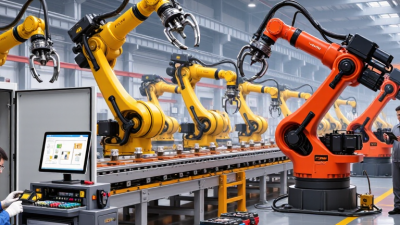
Industrial robots are reshaping manufacturing, assembly, and quality control. According to the International Federation of Robotics’ World Robotics 2024 report, 541,302 industrial robots were installed worldwide in 2023. More than 4.28 million units were operating globally. These figures show strong demand, but automation is not automatically efficient.

A practical project might use robotic arms for welding, screwdriving, palletizing, or visual inspection. In assembly, torque sensors can detect loose fasteners before products leave the line. Cameras can identify scratches, missing parts, or incorrect labels. A robot should also record cycle time and defect data. This evidence helps engineers adjust fixtures, lighting, and grippers. Deloitte’s 2024 Smart Manufacturing and Operations Survey found that 86% of surveyed manufacturers expect smart manufacturing to become a major competitiveness driver within three years. Still, early projects can disappoint. A poorly positioned camera may create false rejects. Human review remains useful.

Tips: Start with one repetitive process and define measurable targets. Track cycle time, first-pass yield, downtime, and inspection accuracy. Test the robot beside experienced operators before full deployment. Keep safety zones clear and document every change. Choose flexible tooling where product variations are common. The cheapest cell may become expensive after rework. Pilot carefully.

10 Best Robotics Projects for Businesses Worldwide? - Industrial Robots for Manufacturing, Assembly, and Quality Control

No. Robotics Project Primary Industry Robot Configuration Main Business Task Typical Payload Typical Reach Typical Performance Quality or Safety Benefit Typical Deployment Time Indicative Payback Period
1 Automated Welding Cell Metal fabrication and heavy equipment Six-axis articulated robot Arc welding, seam tracking, torch positioning, and repeatable joint production 6–20 kg 1.4–2.0 m Approximately 10–30 welded assemblies per shift, depending on joint complexity More consistent weld paths, reduced exposure to fumes and heat, and lower rework rates 8–16 weeks 12–30 months
2 Robotic Palletizing System Food, beverage, chemicals, and consumer goods Four-axis palletizing robot Layer formation, case handling, pallet loading, and product pattern changes 40–250 kg 2.0–3.2 m 20–60 cases per minute in high-speed packaging applications Improved stacking stability, fewer lifting injuries, and consistent pallet patterns 6–14 weeks 12–24 months
3 Machine Tending and Part Loading Automotive components and precision machining Six-axis or collaborative robot Loading and unloading CNC machines, transferring parts, and monitoring cycle completion 5–50 kg 0.9–2.1 m Continuous operation across two or more machine cycles Higher machine utilization, reduced manual handling, and stable cycle timing 4–10 weeks 9–24 months
4 Vision-Based Quality Inspection Electronics, packaging, and medical products Robot arm with industrial vision Surface inspection, dimensional checks, label verification, and defect sorting 2–20 kg 0.7–1.8 m Inspection rates commonly reach 30–300 parts per minute, depending on image complexity Repeatable inspection criteria, traceable results, and earlier defect detection 6–14 weeks 12–36 months
5 Robotic Assembly Workstation Electrical equipment, appliances, and mechanical products Six-axis or SCARA robot Screwdriving, component insertion, fastening, and subassembly handling 1–15 kg 0.4–1.5 m Cycle times of approximately 5–30 seconds per assembly operation Controlled fastening, lower ergonomic risk, and improved assembly consistency 8–20 weeks 18–36 months
6 Collaborative Packaging and Kitting Consumer products, healthcare supplies, and light manufacturing Collaborative robot Pick-and-place, carton loading, kit preparation, and product replenishment 3–16 kg 0.7–1.3 m Approximately 8–25 picks per minute, based on item size and gripper design Flexible operation near workers, reduced repetitive motion, and faster product changeovers 4–12 weeks 12–30 months
7 Robotic Painting and Coating Cell Automotive parts, furniture, and industrial equipment Six-axis painting robot Spray coating, paint thickness control, masking support, and surface finishing 5–15 kg 1.5–2.7 m Stable spray paths with repeatable gun speed and stand-off distance More uniform coating, lower overspray, and reduced worker exposure to hazardous materials 12–24 weeks 18–42 months
8 Automated Material Handling Cell Warehousing, distribution, and component manufacturing Mobile robot or robotic arm Bin movement, line-side delivery, finished-goods transfer, and inventory replenishment 50–1,500 kg, depending on platform Facility-dependent navigation range Multi-shift operation with scheduled routes and digital task allocation Reduced internal transport effort, better material traceability, and fewer traffic-related risks 8–20 weeks 18–48 months
9 Robotic CNC Deburring and Finishing Machined metal and plastic components Force-controlled articulated robot Deburring, edge rounding, polishing, grinding, and surface preparation 5–30 kg 1.0–2.0 m Consistent tool pressure and repeatable finishing across batch production Improved edge quality, reduced dust and vibration exposure, and less manual rework 10–20 weeks 18–36 months
10 Automated Inspection and Sorting Line Recycling, food processing, and discrete manufacturing Delta robot or vision-guided picker Object recognition, product grading, contaminant removal, and defect sorting 0.1–5 kg 0.4–1.6 m Up to approximately 60–150 picks per minute in high-speed applications Consistent sorting decisions, improved hygiene, and reduced manual inspection workload 8–18 weeks 12–30 months

Performance, deployment, and payback figures are typical industry planning ranges. Actual results vary according to product mix, line speed, tooling, integration complexity, labor costs, safety requirements, and facility conditions.

Service Robots for Logistics, Healthcare, Retail, and Hospitality

Service robotics is moving from impressive demonstrations into daily business workflows. The International Federation of Robotics’ World Robotics 2024 report recorded nearly 200,000 professional service robots sold in 2023. That represented 30% growth. MHI’s 2024 Annual Industry Report found that 55% of supply-chain respondents already used robotics, while 75% expected adoption by 2029.

Ten practical projects fit logistics, healthcare, retail, and hospitality. Logistics operators can deploy autonomous warehouse transport, robotic picking, and inventory scanning. Healthcare facilities can introduce medicine delivery, linen transport, and patient-navigation robots. Retailers can use shelf-scanning robots and automated stock replenishment. Hotels can test room-delivery robots and kitchen-transport systems. A robot moving medicine at 2 a.m. may reduce staff walking time, but it still needs safe elevator access and human oversight.

Pilot one corridor first. Measure delivery time, missed tasks, downtime, and staff acceptance. Do not rely on unit sales alone. IFR data shows market growth, not guaranteed business value. Robots may struggle with cluttered floors, changing layouts, or unusual customer requests. That is the uncomfortable part. A technically successful trial can still fail financially. Clear handoff rules, maintenance training, and accessible emergency controls make deployment more reliable. Human judgment remains essential.

Autonomous Systems for Agriculture, Construction, and Infrastructure

10 Best Robotics Projects for Businesses Worldwide

Autonomous robotics is changing how businesses manage farms, building sites, and public infrastructure.

In agriculture, useful projects include crop-scouting rovers, soil-sampling machines, targeted weed removers, and automated harvesting platforms. A small rover can inspect leaves between crop rows, record moisture levels, and flag stressed plants before damage spreads. The best systems combine cameras, soil sensors, mapping software, and clear human controls.

Reliable data matters more than impressive movement.

Construction companies can develop autonomous surveying robots, material transport units, bricklaying assistants, and excavation support vehicles. A surveying robot may scan a site at dawn, creating a precise terrain model before workers arrive. Transport machines can move tools across uneven ground, reducing repetitive lifting.

However, dust, loose gravel, and changing work zones still confuse many systems. That limitation is easy to underestimate.

Infrastructure projects offer further opportunities, including bridge inspection robots, tunnel-mapping devices, road-monitoring vehicles, and drainage inspection crawlers.

A bridge robot can capture close images of joints, bolts, and surface cracks while keeping inspectors away from difficult edges. In tunnels, mapping equipment can identify water leaks and structural shifts over time.

Field testing should include rain, poor lighting, signal loss, and unexpected obstacles. A perfect demonstration proves little. Businesses also need maintenance plans, operator training, secure data handling, and documented safety checks. Human review remains essential when conditions change quickly.

Comparing Costs, Benefits, Risks, and Global Implementation Potential

The ten strongest robotics projects for businesses include warehouse mobile robots, collaborative assembly arms, vision inspection, palletizing, welding, agricultural harvesting, hospital delivery, cleaning, construction surveying, and waste sorting. Their costs vary widely. A small inspection cell may need modest hardware and training. A harvesting system can require expensive sensors, outdoor testing, and seasonal maintenance. Benefits should be measured in clear terms: reduced cycle time, fewer injuries, lower defects, or longer operating hours. A practical pilot often uses one production line and three months of baseline data. Small pilots win.

Risk is not limited to mechanical failure. Poor data, worker resistance, cybersecurity gaps, and weak maintenance plans can stop a promising project. Human oversight remains essential, especially near moving equipment or in public spaces. Global implementation also depends on electricity quality, technical skills, language support, import rules, and local safety requirements. Mobile robots may scale well in distribution centers, while agricultural systems face unpredictable weather and uneven fields. Waste sorting can deliver strong environmental value, but contaminated materials reduce accuracy. I would not promise rapid payback. Some projects need eighteen months before savings become reliable. That uncertainty deserves honest budgeting. Businesses should compare total ownership cost, integration time, training, repairs, and measurable benefits across regions. A technically impressive robot may still fail if staff cannot service it locally. Reflection matters here: automation is not always the cheapest answer. Better workflow design may solve the problem first.

10 Best Robotics Projects for Businesses Worldwide

Comparing estimated implementation cost, annual business benefit, and operational risk

The chart uses indicative global planning benchmarks in USD thousands. Estimated benefits represent potential annual labor, throughput, quality, safety, or waste improvements after deployment. Risk is scored from 1 (lower integration risk) to 5 (higher technical, regulatory, or operational risk). Actual results vary by country, facility size, workforce costs, infrastructure, and project scope.