China Top 10 Steel Framework Manufacturers?
China’s Steel Framework market deserves careful attention, not a simple ranking. China produced approximately 1,005 million tonnes of crude steel in 2024, according to the World Steel Association’s 2025 industry statistics. That represented more than half of global output. The figure explains China’s manufacturing scale, but it does not automatically prove superior engineering, delivery, or service.
This guide examines ten leading Chinese steel framework manufacturers through practical criteria. These include annual capacity, fabrication quality, project experience, certification, export performance, and after-sales support. The International Energy Agency also identifies steel as a major industrial emissions source, making energy efficiency and lower-carbon production increasingly important. Small details matter. Weld consistency matters. Coating thickness matters. So does the clarity of a shop drawing.
Edwin Basson, Director General of the World Steel Association, has described steel as “a vital material for modern life.” That statement remains relevant, especially for warehouses, industrial plants, stadiums, and logistics buildings. However, this article should not pretend that one list fits every buyer. A low-cost supplier may suit a basic portal frame, while a complex offshore or seismic project requires deeper engineering control. Rankings can also change when data is incomplete, privately reported, or measured differently. That weakness deserves attention.
The following overview therefore treats “top” as a balanced industry judgment, not an absolute fact. It combines public company information, technical capabilities, market reputation, and available project evidence. Readers should still verify licenses, mill certificates, structural calculations, and local compliance before selecting a supplier.
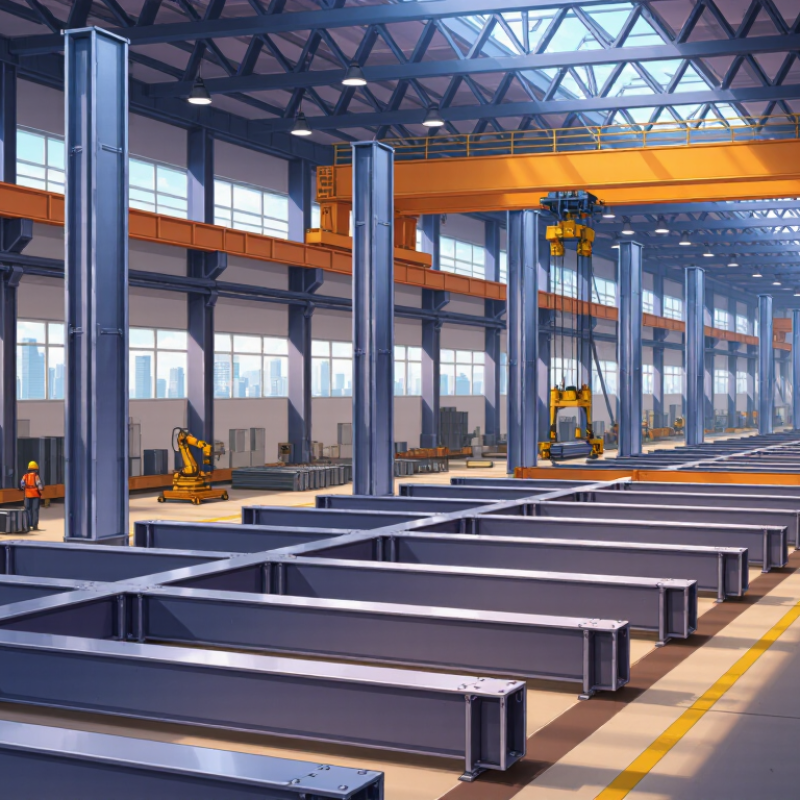
China’s Steel Framework Manufacturing Industry at a Glance
China’s steel framework manufacturing industry sits within the world’s largest steel ecosystem. The World Steel Association reported that China produced about 1.005 billion tonnes of crude steel in 2024. This scale supports large factories, dense supplier networks, and competitive export capacity. It also creates pressure on energy use, carbon control, and material traceability.
Manufacturers serving industrial plants, warehouses, bridges, and high-rise projects usually compete through fabrication accuracy, welding control, coating systems, and delivery reliability. The National Bureau of Statistics tracks China’s industrial production, while the China Steel Construction Society publishes sector research on steel structures and engineering practices. These sources show why production volume alone cannot define the top 10 manufacturers. Certification, project experience, inspection records, and installation support matter more in difficult environments.
The scale is real. Quality varies.
A practical review should examine mill certificates, ultrasonic testing, bolt traceability, and dimensional tolerances. Factory details matter too: enclosed blasting rooms, calibrated cutting lines, and clearly separated steel grades reduce avoidable defects. China’s construction market is also moving toward prefabrication and lower-carbon materials, according to policy documents from the Ministry of Housing and Urban-Rural Development. Yet public data remains uneven. Some companies report output, while others emphasize project value, making direct ranking imperfect. Buyers should therefore compare verified capacity, audited quality systems, and recent delivery records instead of trusting a simple popularity list.
How the Top 10 Steel Framework Manufacturers Are Selected
China Top 10 Steel Framework Manufacturers?
Selecting the top ten requires more than comparing factory size or quoted prices. The review should combine audited capacity, project experience, engineering control, delivery performance, and material traceability. World Steel Association’s World Steel in Figures 2024 reports 1.892 billion tonnes of crude steel production in 2023. This scale makes quality consistency more important than impressive production claims.
A reliable assessment checks compliance with ISO 9001, welding qualifications, inspection records, and applicable structural standards. It should also examine steel grades, coating thickness, bolt testing, and load calculations. The International Energy Agency identifies iron and steel as responsible for about 7% of global energy-related emissions. Therefore, credible manufacturers should disclose energy use, recycled content, and emissions data. However, public information is often incomplete. A ranking can still miss hidden subcontracting risks or weak after-sales support.
Tips: Request three recent project references and verify their completion dates. Compare nonconformance rates, not only delivery promises. Ask for mill certificates, third-party inspection reports, and sample drawings before signing. Check how the manufacturer handles design changes, corrosion repairs, and replacement parts. A low bid may reflect thinner protection or limited testing. The selection process should score technical reliability, documented experience, sustainability, and communication separately. Price matters, but it should not dominate the decision.
Profiles of China’s Top 10 Steel Framework Manufacturers
China’s top ten steel framework manufacturers represent different strengths, not one identical business model. One focuses on high-rise structural frames, while another serves warehouses, factories, and logistics parks. Several combine engineering, fabrication, surface treatment, and site installation. This integrated workflow can reduce coordination problems and shorten construction schedules.
The strongest profiles usually show clear quality systems, traceable steel certificates, and experienced welding teams. Some manufacturers specialize in modular frames for rapid assembly. Others handle large-span arenas, bridges, or heavy industrial structures. Export-oriented producers often provide shop drawings, packing plans, and multilingual project support. Their real advantage is practical control from design review to final bolt inspection. However, “top” rankings can be subjective. A company with impressive equipment may still struggle with communication or after-sales service.
Tips: Request recent project evidence, not only polished brochures. Check welding procedures, coating thickness records, and dimensional inspection reports. Confirm whether calculations follow the required local standards. Ask who manages changes after fabrication begins. A small drawing mistake can become an expensive site delay. I would also compare lead times carefully; the cheapest quotation is rarely the safest choice. Visit the factory when possible, though one visit cannot prove everything. Reliable selection needs technical documents, direct questions, and a little healthy skepticism.
Comparing Products, Capabilities, Certifications, and Market Reach
China’s top ten steel framework manufacturers should be compared through products, production control, certifications, and market reach. Their portfolios may include warehouse frames, industrial platforms, agricultural structures, and modular building systems. Some supply galvanized columns, roof trusses, purlins, and connection plates. Others focus on heavy structures for factories, stadiums, or logistics centers.
Production capability matters beyond factory size. A reliable manufacturer should provide shop drawings, material traceability, welding procedures, and dimensional inspection records. Ask how it manages a 40-meter beam, not just a polished brochure.
Automated cutting can improve consistency, while experienced welders remain essential for complex joints. Factory audits, sample inspections, and third-party testing add practical confidence. Still, certificates need careful checking. ISO 9001 supports quality management, but it does not prove every project will perform well. EN 1090, AWS-based procedures, or local compliance documents may apply differently by destination.
Market reach also reveals operational maturity. Export experience should include customs documents, seaworthy packing, installation guidance, and communication across time zones. A manufacturer serving several regions may understand varied wind, snow, seismic, and fire requirements. However, global reach can create weaker local support. Delivery promises may also change when steel prices or port schedules shift. Comparing ten suppliers is therefore not only a price exercise. Review engineering depth, inspection evidence, response speed, spare-part planning, and real project references. The cheapest quotation may hide thinner steel, unclear tolerances, or costly installation work.
Key Factors for Choosing a Chinese Steel Framework Manufacturer
China Top 10 Steel Framework Manufacturers?
Choosing a Chinese steel framework manufacturer requires more than scanning a top-ten ranking. The World Steel Association reported China’s crude steel production at approximately 1.005 billion tonnes in 2024. This capacity can support competitive pricing, but scale does not guarantee accurate fabrication or reliable delivery. A strong supplier should show project records, welding qualifications, traceable material certificates, and clear inspection procedures.
Ask how the factory controls steel thickness, weld penetration, bolt alignment, and coating quality. Request third-party inspection before shipment. Check whether drawings follow recognized standards, such as ISO, EN, or applicable local codes. The 2023 ISO Survey recorded more than 1.26 million ISO 9001 certificates worldwide, yet certification alone proves little. Verify the certificate scope and audit status.
Factory experience matters.
Review similar buildings, not only impressive photographs. A warehouse frame, stadium roof, and industrial platform require different engineering decisions. Request sample shop drawings and a realistic production schedule. Also examine packaging details, because scratched coatings and missing bolts create expensive site delays. My own checklist is not flawless; price, speed, and certification can still distract from communication quality. Ask technical questions twice, using different wording. Clear answers usually reveal genuine expertise.
China Top 10 Steel Framework Manufacturers? – Key Factors for Choosing a Chinese Steel Framework Manufacturer
Structural steel grade compliance is a practical benchmark when evaluating a steel framework manufacturer. The chart compares minimum yield-strength values for common European structural steel grades at nominal thicknesses up to 16 mm.
Reference basis: EN 10025 structural steel requirements. Buyers should also verify material certificates, welding procedures, dimensional tolerances, corrosion protection, production capacity, and third-party inspection arrangements.
