Top 10 Automation Machine Manufacturers Worldwide?
The global automation machine market is changing quickly, driven by smart factories, labor shortages, and stricter quality expectations. Manufacturers now supply robotic cells, packaging systems, CNC equipment, inspection tools, and integrated production lines. Yet a famous name does not guarantee the best fit. That matters.
This guide introduces ten leading automation machine manufacturers worldwide. The selection considers engineering experience, product reliability, global service coverage, software capability, and documented industrial performance. It also examines practical details, such as cycle time, machine footprint, maintenance access, safety systems, and operator training. These factors often decide whether a machine succeeds on a factory floor.
Some companies excel in high-speed assembly. Others focus on precision machining, warehouse robotics, or flexible packaging. Their strengths differ by industry, production volume, and regional support. A system that performs well in automotive manufacturing may be excessive for a smaller food-processing plant. Not always.
Reliable evaluation requires more than comparing brochures. Factory references, technical certifications, spare-parts availability, and long-term maintenance records deserve attention. However, public information can be incomplete, and rankings may reflect market visibility rather than every customer’s experience. This article recognizes that limitation. It offers a practical starting point, not an absolute verdict.
Readers can use the list to compare established suppliers and identify suitable technologies. Before purchasing, they should request application testing, total-cost estimates, integration plans, and service commitments. The best automation machine is not necessarily the most advanced. It is the one that delivers safe, consistent, measurable value in its intended environment.
Defining Automation Machines and Their Role in Modern Industry
Top 10 Automation Machine Manufacturers Worldwide?
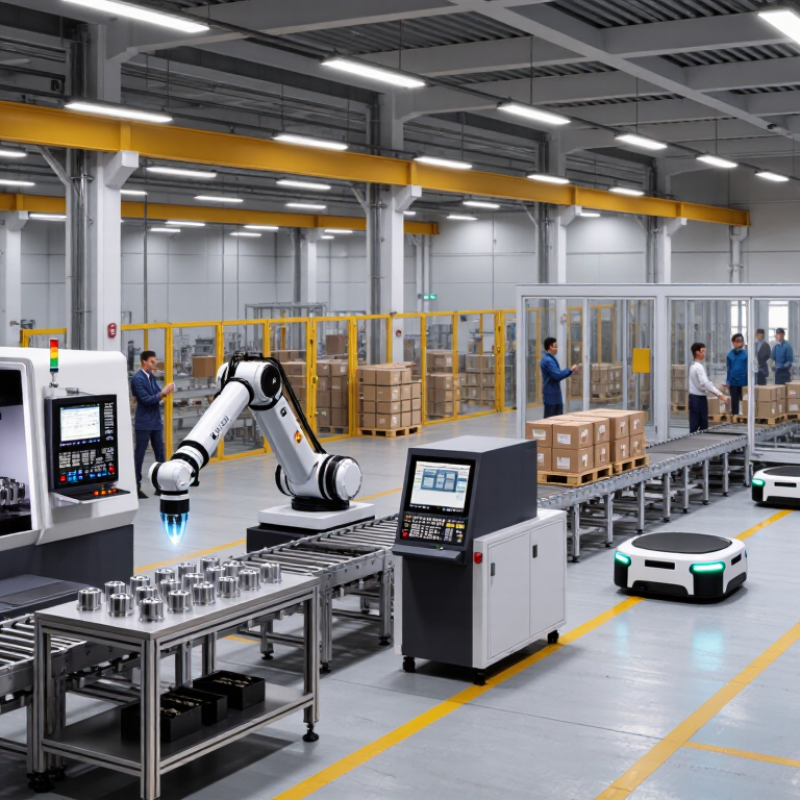
Automation machines are engineered systems that perform repeated industrial tasks with limited human intervention. They may include robotic arms, conveyor systems, CNC equipment, vision inspection units, and automated packaging lines. Sensors collect information, controllers process it, and actuators complete the physical movement. The process resembles a carefully timed orchestra.
In modern factories, these machines improve production speed, consistency, workplace safety, and traceability. A vision camera can detect a scratched surface in milliseconds. A robotic gripper can place hundreds of components per hour. From practical factory observations, reliable automation depends on more than machine speed. Correct tooling, stable software, clear maintenance procedures, and trained operators matter just as much. Small alignment errors can stop an entire line.
Manufacturers are evaluated through engineering capability, system integration, service response, and long-term reliability. A strong supplier studies the product, factory layout, cycle time, energy use, and future upgrades before proposing equipment. Overlooking one detail can create expensive downtime. Automation also requires honest limits. Not every manual task benefits from replacement, especially when product variations remain high. In my view, the best systems support workers rather than simply remove them. Operators still need accessible controls, safe working distances, and useful performance data. A well-designed machine should explain its condition through alarms, dashboards, and simple diagnostic steps, although some systems remain unnecessarily difficult to understand.
Criteria for Comparing Global Automation Machine Manufacturers
Comparing global automation machine manufacturers requires more than reading product brochures. Examine engineering experience in your industry, not only the number of years in business. Ask for documented results from similar production lines, including cycle time, defect rates, and maintenance records. A factory visit can reveal details that sales presentations often hide. Watch how operators access sensors, change tooling, and clean the machine. Small design choices matter.
Technical capability should match your process and future plans. Compare control-system compatibility, data collection, safety design, energy use, and expansion options. Request clear Factory Acceptance Testing and Site Acceptance Testing procedures. Review spare-parts availability, response times, training, and remote-support limits. Total cost matters more than the purchase price. A cheaper machine may create expensive downtime. Numbers can mislead. No scorecard is perfect.
Tips:
Build a weighted comparison sheet before requesting quotations. Give reliability, service, integration, and safety measurable scores. Check whether promised output was achieved under real material conditions. Ask who will support the machine after installation, and obtain written answers. Also inspect technical documentation for language quality and revision control. Missing details are warning signs, though not always proof of poor engineering. Leave room for an independent review; internal teams can overlook familiar risks.
Top Automation Machine Manufacturers by Technology and Market Reach
Automation machine leadership now depends on technology depth and market reach, not factory size alone. A credible top-ten assessment should examine robotic assembly, machine vision, motion control, packaging, welding, and warehouse systems. The International Federation of Robotics reported 541,302 industrial robots installed worldwide in 2023. More than 4.28 million units were operating globally. These figures show strong demand for flexible production equipment, especially in electronics, automotive, logistics, and food processing.
Technology separates established manufacturers from capable newcomers. High-speed vision inspection reduces missed defects on moving conveyor lines. Digital twins help engineers test cycle times before installing equipment. Modular machines also shorten changeovers between product formats. The International Energy Agency notes that industrial electricity demand remains significant, making energy-efficient drives and predictive maintenance commercially important. Small gains matter. A two-second cycle reduction can create thousands of additional units each month.
Market reach requires more than overseas sales offices. Manufacturers need local integration teams, spare-parts access, training, and dependable cybersecurity practices. Research from MarketsandMarkets projects continued expansion in the industrial automation market through the decade, driven by connected factories and labor shortages. However, market forecasts are not guarantees. No ranking is flawless. Some suppliers report strong technology but limited service coverage; others provide excellent support with less advanced software. A careful comparison should therefore score performance, installed base, regional support, safety compliance, and total operating cost. That approach is less glamorous, but more useful for buyers choosing equipment that must run reliably at 3 a.m.
Core Products and Industrial Applications of Leading Manufacturers
Top 10 Automation Machine Manufacturers Worldwide: Core Products and Industrial Applications
The leading ten manufacturers compete across robots, CNC systems, programmable controllers, motion drives, sensors, and integrated production lines. Their core products support automotive welding, electronics assembly, food packaging, pharmaceutical filling, and warehouse handling. Robotic arms often manage repetitive tasks, while vision systems inspect tiny defects under harsh factory lighting. CNC platforms shape metal parts with repeatable accuracy. Packaging machines coordinate conveyors, fillers, sealers, and labeling units at high speed.
Demand remains substantial. The International Federation of Robotics reported 541,302 industrial robot installations worldwide in 2023, nearly 10% above the previous year. Its World Robotics 2024 report also recorded about 4.28 million robots operating in factories. Grand View Research estimated the industrial automation market at approximately 233 billion US dollars in 2023, although research methods differ. Numbers vary.
In practice, manufacturers increasingly combine hardware, software, and predictive maintenance services. A controller may adjust motor speed, detect vibration, and stop a line before damage spreads. These systems serve automotive plants, semiconductor facilities, logistics centers, and beverage factories. Energy monitoring is also becoming essential as factories seek lower operating costs. Yet automation is not automatically efficient. Poorly trained operators, weak data networks, or unsuitable grippers can reduce expected gains. A smaller machine may outperform a larger system when floor space, maintenance access, and product changeovers matter. No ranking stays perfect.
Key Trends Shaping the Future of Automation Machine Manufacturing
Top 10 Automation Machine Manufacturers Worldwide?
Automation machine manufacturing is shifting from isolated equipment toward connected production systems. The International Federation of Robotics reported 541,302 industrial robots were installed worldwide in 2023. Asia represented about 70% of new installations, confirming the region’s manufacturing influence. The strongest suppliers now combine robotics, machine vision, motion control, and real-time analytics. A fast arm is no longer enough.
Artificial intelligence is changing inspection and process adjustment. Cameras can identify surface defects, while software detects unusual vibration before a motor fails. Digital twins also help engineers test cycle times before changing the factory floor. Deloitte’s 2024 smart manufacturing research found that many manufacturers are prioritizing data foundations, cybersecurity, and workforce skills. These investments often decide whether automation scales beyond a pilot line.
Energy efficiency is becoming a purchasing requirement. The International Energy Agency notes that industrial efficiency remains essential for reducing global energy demand. Manufacturers increasingly seek lightweight robots, regenerative drives, and machines that enter low-power modes during idle periods. Human-machine collaboration is expanding, too. Yet the technology is not flawless. Poorly labeled data can weaken AI decisions, and complex systems may overwhelm smaller factories. A practical supplier evaluation should examine maintenance access, training quality, spare-part availability, and measurable payback—not impressive demonstrations alone. Data matters more than showroom speed.
Top 10 Automation Machine Manufacturers Worldwide? - Key Trends Shaping the Future of Automation Machine Manufacturing
Global industrial robot installations provide a measurable indicator of automation machine demand and manufacturing expansion.
Global industrial robot installations increased from approximately 373,000 units in 2019 to more than 541,000 units in 2023. The long-term growth reflects accelerating adoption of flexible production, machine vision, connected systems, and labor-saving automation technologies. Data source: International Federation of Robotics, World Robotics 2024.