2026 Best Robotic Welding Cell Features and Innovations to Look For?
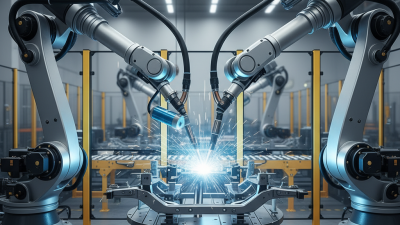
In the era of advanced manufacturing, the robotic welding cell is revolutionizing production processes. As we look toward 2026, innovations in this technology continue to shape the industry. These cells enhance efficiency and precision, making them essential for many businesses.
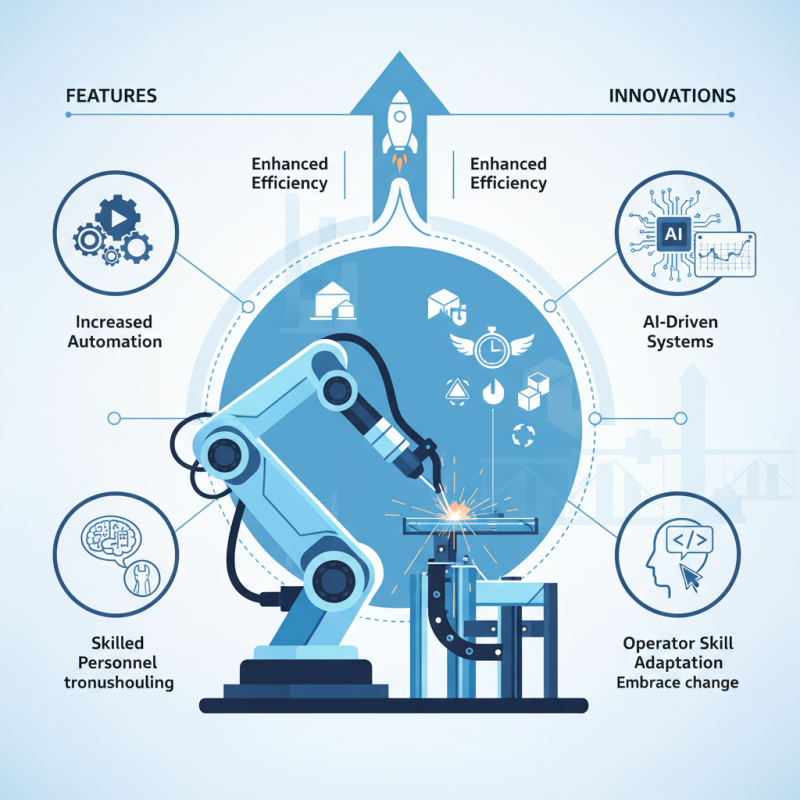
One notable feature emerging in robotic welding cells is increased automation. This ensures consistency and quality in welding tasks. However, one must consider the challenges that come with such automation. Maintenance and troubleshooting require skilled personnel. The human element is crucial, even in a high-tech setting.
Another innovation is the integration of AI-driven systems. These systems analyze data in real-time, improving decision-making. Yet, they also introduce complexity. Operators must adapt their skills to interact with advanced software. Embracing this change can be daunting but necessary for staying competitive. Robotic welding cells offer promises that might just reshape how we think about manufacturing. The journey has its obstacles, but exploring these cutting-edge features can lead to greater productivity and innovation.
Key Characteristics of Robotics in Welding Cells for 2026
The landscape of robotic welding technology in 2026 is evolving rapidly. One key characteristic is the integration of advanced sensors. These sensors enhance precision and adapt to real-time changes during the welding process. This responsiveness improves weld quality significantly. Another feature gaining attention is user-friendly interfaces. Operators can easily interact with the robotic systems, even with minimal training.
Moreover, the use of artificial intelligence (AI) is crucial. AI algorithms can optimize welding paths and settings based on historical data. This capability boosts efficiency and reduces errors. However, the reliance on AI presents challenges. The systems require regular updates and maintenance, which can complicate operations.
Sustainability is also a focus. Robotic welding cells are becoming more energy-efficient. They consume less power while delivering high performance. Yet, achieving this goal can be difficult. Companies must balance production needs with environmental responsibilities. Continuous innovation is crucial. The future of robotic welding will rely on overcoming these obstacles.
Innovative Technologies Enhancing Robotic Welding Efficiency
As the demand for precision in welding increases, robotic welding cells are evolving. Innovative technologies play a key role in enhancing their efficiency. Advanced sensors are now integral to these systems, providing real-time feedback. They detect misalignments and adjust weld paths on the fly.
Artificial intelligence is another game-changer. AI enhances decision-making in welding processes. It analyzes previous jobs, predicting optimal settings and minimizing errors. Yet, these technologies aren’t flawless. Over-reliance on automated decisions can lead to unexpected issues, such as poor weld quality.
Integration with cloud computing is promising. It allows for data storage and analysis over time. This connectivity can identify patterns that may go unnoticed. However, it raises concerns over data security. With so much at stake, companies need to reevaluate their cybersecurity measures regularly. These innovations hold tremendous potential, but challenges remain. The balance between technology and human oversight is crucial for success.
Safety Features to Consider in Modern Robotic Welding Cells
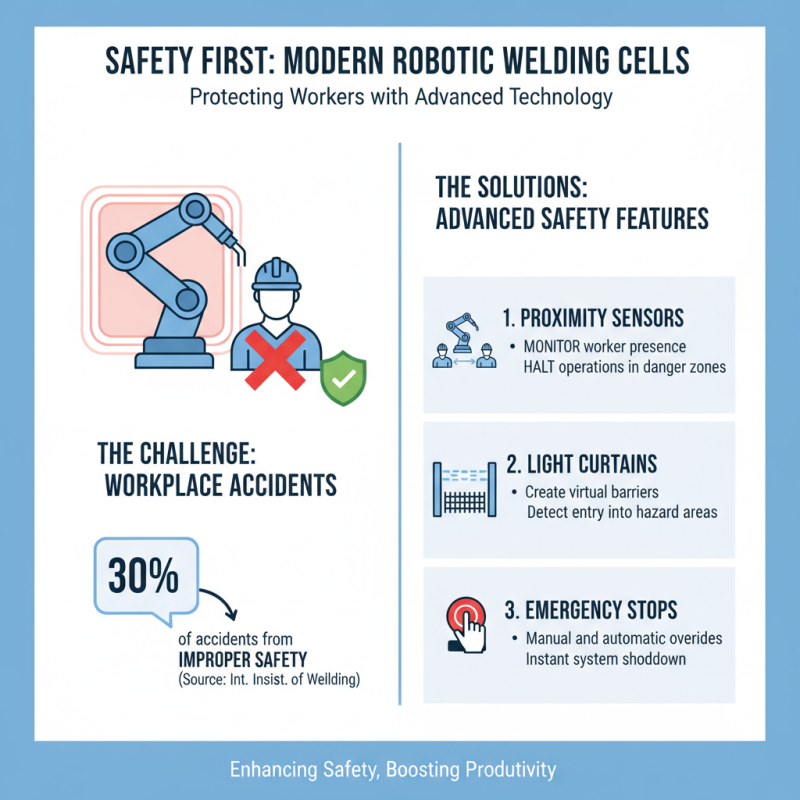
When considering modern robotic welding cells, safety features are paramount. According to the International Institute of Welding, over 30% of workplace accidents arise from improper safety measures. Therefore, integrating advanced safety technologies is crucial. Look for proximity sensors that monitor worker presence. These devices can halt operations instantly if someone enters a danger zone.
Additionally, the use of advanced machine learning algorithms can enhance predictive safety measures. A recent study indicated that predictive analytics could reduce accidents by up to 40%. These systems assess real-time data from welding operations to identify potential risks. However, many organizations still overlook these innovations. They may rely on outdated safety protocols. This creates vulnerabilities in the manufacturing environment.
Moreover, robotic welding arms should have built-in emergency stop functions. These need to be easily accessible to operators. Yet, reports show that some facilities do not prioritize this feature. Accessibility is vital for worker safety. The push for automation should not compromise these essential safety features. Decision-makers must rethink their approach. The focus on efficiency must align with worker safety.
Integration of AI and Machine Learning in Welding Robotics
The integration of AI and machine learning into welding robotics is transforming the industry. These technologies enable robots to learn from their environments and adapt to new tasks with minimal human intervention. Such adaptability can enhance welding accuracy, ensuring consistently high-quality results. The robots process data in real-time, improving efficiency and reducing wasted materials.
However, there are challenges. AI depends on vast amounts of data to function effectively. If the data is incomplete or biased, the outcomes can lead to defects in welding. Additionally, programmers must continuously update the algorithms to handle new scenarios. This requires a constant commitment to training and refining systems.
Robot operators may also struggle to grasp these advanced technologies fully. Some find it hard to interpret the data generated by AI systems. Training programs are essential but may lag behind technological advancements. Thus, while AI and machine learning hold great promise for welding automation, companies must address these hurdles to maximize their benefits.
2026 Best Robotic Welding Cell Features and Innovations to Look For
| Feature |
Description |
Impact on Efficiency |
AI/ML Integration |
| Adaptive Welding Technology |
Automatically adjusts parameters based on material variability. |
Increases welding quality and reduces material waste. |
Uses ML algorithms to optimize settings in real-time. |
| Enhanced Vision Systems |
High-resolution cameras for precise seam tracking. |
Improves accuracy and reduces rework costs. |
AI models process images for better seam recognition. |
| Predictive Maintenance |
Monitors system health to predict failures before they occur. |
Reduces downtime and maintenance costs. |
ML algorithms analyze wear patterns for forecasts. |
| Collaborative Robotics |
Robots work alongside humans safely. |
Boosts productivity by enabling human-robot collaboration. |
AI ensures safe interactions and workflows. |
| Data-Driven Quality Control |
Continuous monitoring of weld quality through data analysis. |
Enhances product consistency and reduces rejects. |
AI analyzes production data for quality assurance. |
Future Trends in Automation and Robotic Welding Innovations
Automation in robotic welding is evolving rapidly. The 2026 trends highlight several key innovations. One significant development is the integration of AI-driven systems. These systems can adapt in real-time, enhancing precision and efficiency. However, the learning curve can pose challenges for operators.
Another trend is modular cell design. This allows for flexible configurations to meet varying production needs. While this adaptability is promising, it raises questions about standardization. How can companies ensure compatibility across different systems? Addressing this will be essential for widespread adoption.
Lastly, data analytics is transforming welding processes. Real-time monitoring can predict failures and optimize performance. Yet, relying solely on data can sometimes overlook human insights. Balancing technology and human expertise remains a crucial aspect of innovation in robotic welding.