Accordian Closable

10 Best Loading Robots for Global Buyers?

Choosing among the 10 best Loading Robots requires more than comparing advertised speed. Global buyers need evidence from real loading environments, including dock height, pallet dimensions, trailer access, dust, cold rooms, and shift length. A robot moving 1,000 cases per hour in a showroom may perform differently beside a crowded loading bay. Practical experience matters here. Operators notice details that brochures often miss, such as gripper changes, sensor cleaning, and recovery after a misplaced carton. Small faults become expensive delays.

This guide examines leading Loading Robots through practical criteria: payload, reach, cycle consistency, safety systems, software integration, installation demands, and after-sales support. It also considers documentation, training, spare-parts access, and regional service coverage. These points help procurement teams compare suppliers with greater confidence. Independent certifications and transparent test data deserve more trust than dramatic marketing claims. Still, no ranking can fit every warehouse. A food distributor may value washdown resistance, while an automotive shipper may prioritize precision and heavier payloads. The best choice depends on the dock, not the headline.

The discussion reflects current industry practice, but conditions change. Product specifications, pricing, and support networks should be verified directly before purchase. Some information may remain incomplete. That is worth admitting. Buyers should request site assessments, reference customers, and a pilot run with representative loads. A careful decision can reduce manual strain, protect product flow, and improve long-term reliability without promising unrealistic results.

10 Best Loading Robots for Global Buyers?

What Are Loading Robots and How Do They Work?

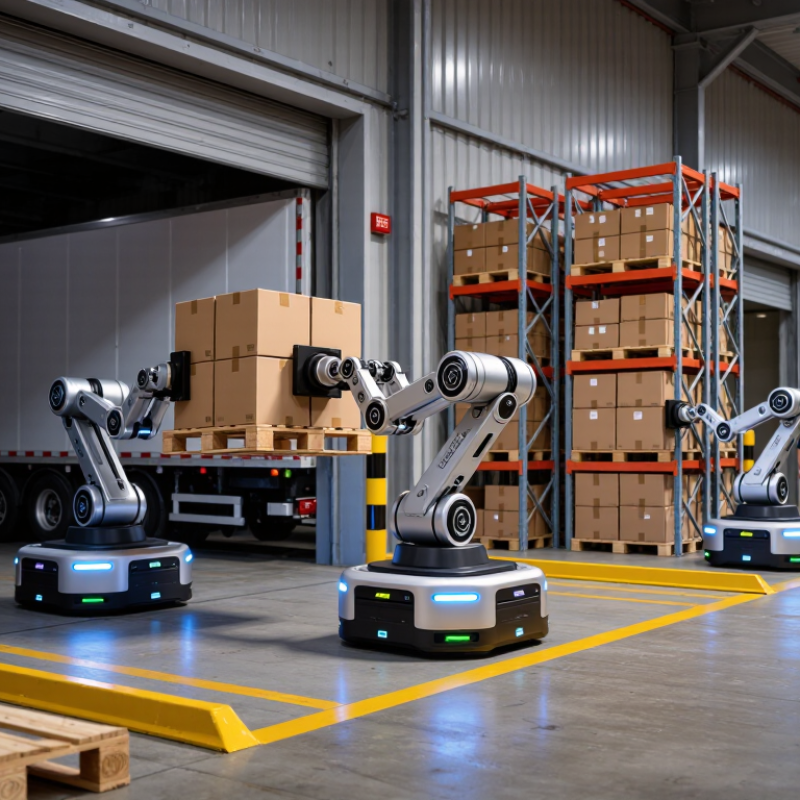
Loading robots are automated machines that move cartons, bags, or containers onto pallets, trucks, and conveyors. Their work begins with sensing. Cameras, laser scanners, or pressure sensors identify an item’s position, size, and orientation. A controller then plans the safest movement before the robot grips and lifts the load.

On a warehouse floor, the process may look simple. A carton arrives on a conveyor. The robot detects its leading edge, selects a pallet pattern, and places the carton with controlled force. Some systems use vacuum tools, while others use mechanical clamps or forks. Software checks weight limits, pallet height, and available space. Small errors matter.

Safety remains central. Protective scanners can stop motion when a worker enters a restricted zone. Emergency switches, guarded areas, and controlled restart procedures support safer operations. Global buyers should also check electrical requirements, local machine-safety rules, maintenance access, and operator training. A loading robot is not a plug-and-play miracle. Poor carton data can cause unstable stacks, delays, or damaged packaging. Testing with real products is essential, although many projects underestimate this step. Performance depends on product variation, floor conditions, and the quality of integration with existing equipment.

10 Best Loading Robots for Global Buyers? — What Are Loading Robots and How Do They Work?

Loading robots are industrial robots used to pick, move, orient, and place products, cartons, pallets, or materials. They commonly combine a robotic arm, gripper, sensors, and control software to automate loading and unloading operations.

Chart explanation: Regional industrial-robot installations provide a useful market-context indicator for loading-robot adoption. Asia accounted for the largest share of installations in 2023, followed by Europe and the Americas. Loading robots are one material-handling application within the wider industrial-robot sector.

Source: International Federation of Robotics, World Robotics 2024. Figures are rounded regional installation totals for 2023 and exclude company or brand-level data.

Key Criteria for Choosing a Loading Robot Globally

A loading robot should fit the shipment, dock, and workforce, not merely impress during a demonstration. The International Federation of Robotics reported 541,302 industrial robot installations worldwide in 2023. This growth shows stronger automation demand, but it does not guarantee a suitable loading solution. Global buyers should check payload, reach, cycle time, and pallet compatibility under real operating conditions.

Watch the interface.

Measure truck heights, dock gaps, floor slopes, and lighting before comparing models. A robot handling uniform cartons may struggle with crushed edges, stretch film, or mixed pallet patterns. Safety also requires documented risk assessments and alignment with applicable ISO 10218 and ISO/TS 15066 principles. Local service coverage matters equally. Spare-part delivery, remote diagnostics, operator training, and multilingual manuals can determine uptime across borders.

The MHI 2024 Annual Industry Report found that 55% of surveyed supply-chain professionals already used robotics or automation. That figure suggests adoption is practical, not experimental. Still, I treat advertised return-on-investment claims cautiously. They may exclude integration, maintenance, software updates, and seasonal labor changes. Request a trial using your own cartons, including damaged ones. Record successful picks, stoppages, recovery time, energy use, and human intervention. A slightly slower robot may create fewer failures. That detail is easy to overlook.

Ten Leading Loading Robots for Different Industrial Needs

Ten Leading Loading Robots for Different Industrial Needs

Loading robots now serve far more than standard pallet lines. Each design matches a different industrial challenge. A high-speed palletizing robot suits beverage and packaged-food plants. A case-loading robot handles cartons with changing sizes. A bag-loading robot supports grain, flour, and animal-feed operations. A drum-loading robot moves heavy containers with controlled gripping force. A parcel-loading robot fits distribution centers processing thousands of small packages. A collaborative loading robot works beside trained employees in low-volume facilities. A cold-storage robot performs reliably in chilled warehouses. A container-loading robot uses vision guidance to fill uneven spaces. A heavy-payload robot serves metal, machinery, and construction-component plants. An outdoor loading robot handles dust, rain, and rough dock surfaces.

Choosing the right model requires more than payload capacity. Measure carton dimensions, conveyor height, cycle time, reach, and floor space. Check gripper performance with slippery or damaged packaging. Small details matter. Vision sensors can correct shifting cartons, but poor lighting still causes errors. Field tests should cover peak loads, not only clean samples. A robot rated for 40 kilograms may struggle with unstable bags. That gap can disrupt an entire shift.

Safety systems deserve equal attention. Guarding, emergency stops, speed limits, and access controls must match local requirements. Reliable integrators also document maintenance intervals and spare-part access. Operators should receive practical training near the actual loading dock. Automation reduces lifting injuries, yet it does not remove every risk. Some installations need better layout planning before faster robots. The best choice is not always the most powerful one. It is the system that remains predictable when products, people, and schedules change.

Performance, Cost, Safety, and Compatibility Comparison

10 Best Loading Robots for Global Buyers?

Performance, Cost, Safety, and Compatibility Comparison

Global buyers should score ten loading-robot types against throughput, purchase cost, safety controls, and interface compatibility.

IFR’s World Robotics 2024 report recorded 541,302 industrial robot installations in 2023. This scale signals maturity, not automatic suitability. High-speed palletizers suit repetitive loads. Vision-guided arms handle mixed cartons better. Autonomous mobile loaders reduce conveyor dependence, but floor traffic can slow them. A dock trial should measure cartons per hour, placement accuracy, restart time, and jam recovery.

Cost is more than the robot arm. Include grippers, conveyors, guarding, scanners, integration, training, spare parts, and software licenses. MHI’s 2024 Annual Industry Report, based on more than 1,700 respondents, places robotics and automation among major technology investment priorities.

Buyers still need a three-year total-cost model. Energy, maintenance, and downtime can overturn a low purchase price. That lesson is easy to miss.

For safety, complete a risk assessment before setting speed targets. ISO 10218-1:2025 addresses industrial robot safety. ISO/TS 15066 supports collaborative applications. OSHA guidance stresses guarding, training, and control of unexpected startup.

Compatibility decides daily value. Check payload at full reach, carton dimensions, pallet patterns, PLC protocols, warehouse-management interfaces, and local voltage. A robot that loads one carton perfectly may fail with crushed corners or wet packaging. Test the worst case.

Request cycle-time records, safety validation, cybersecurity controls, and regional service response. Data sheets are useful. They are not field evidence. Human review remains necessary when product mix changes.

Global Purchasing, Installation, and Maintenance Considerations

10 Best Loading Robots for Global Buyers?

Global purchasing starts with the loading task, not the robot catalog. Buyers should record package weight, pallet height, cycle time, and available floor space. A loading robot must match local voltage and communication standards. Small mismatches can delay commissioning for weeks. Ask suppliers for tested performance data, not only attractive specifications.

Installation planning needs local experience. Check doorway widths, ceiling clearance, floor strength, and forklift routes before shipment. Confirm who handles calibration, safety training, and spare-part storage. Remote support is useful, but it cannot replace a technician beside the machine. For overseas projects, clear drawings and translated manuals reduce avoidable errors. Keep one complete replacement sensor on site. It may save a production shift.

Maintenance should be measured in minutes, not promises. Review lubrication points, inspection intervals, diagnostic access, and software update procedures. A reliable supplier explains failure patterns and response times openly. Buyers should also compare technician coverage across time zones. One weakness deserves attention: many evaluations focus on purchase price and ignore operator learning curves. That approach often creates hidden costs. A practical trial with real cartons can reveal unstable gripping, noisy movement, or awkward manual recovery. The best choice may not be the fastest robot. It should remain serviceable when conditions are less than perfect.

10 Best Loading Robots for Global Buyers? - Global Purchasing, Installation, and Maintenance Considerations
Rank Loading Robot Type Best Application Typical Payload Typical Reach / Loading Area Indicative Throughput Packaging Compatibility Installation Requirements Maintenance Considerations Global Purchasing Considerations
1 Robotic Palletizing and Truck-Loading Cell High-volume palletized cartons 80–250 kg per pick, depending on configuration Approximately 2.5–4.0 m working reach; fixed dock or conveyor interface Typically 10–25 cases per minute or 20–40 pallet movements per hour Cartons, bags, shrink-wrapped cases, and standard pallets Requires a guarded cell, floor anchoring, pallet conveyors, safety scanners, and reliable power and compressed air where applicable Inspect grippers, robot joints, conveyor chains, sensors, and safety devices; preventive service is commonly scheduled every 3–6 months Confirm pallet dimensions, electrical standard, language support, safety certification, spare-parts availability, and local integration capability
2 Telescopic Conveyor with Robotic End Effector Mixed carton loading into trailers and containers Usually 15–50 kg per carton Telescopic extension commonly reaches 10–20 m into a vehicle Approximately 300–900 cartons per hour, depending on carton size and operator interaction Corrugated cartons and stable cases with a defined weight range Needs dock-floor clearance, vehicle alignment control, conveyor anchoring, and integration with upstream sortation Maintain rollers, belts, telescoping sections, drive motors, photoelectric sensors, and emergency-stop circuits Check dock dimensions, trailer-height variation, container standards, voltage, customs requirements, and service response time
3 Autonomous Mobile Robot for Pallet Movement Point-to-point transport between staging and loading docks Commonly 600–1,500 kg per vehicle Flexible navigation over warehouse routes; route length is software-configurable Often 20–60 pallet moves per hour per unit, depending on travel distance Standard pallets, roll cages, and pallet boxes with defined footprints Requires mapped routes, charging stations, floor-condition assessment, network coverage, and traffic-management rules Check drive wheels, batteries, lidar or camera sensors, charging contacts, and navigation maps; battery replacement is a periodic cost Verify radio-frequency compliance, warehouse-network security, local safety rules, battery shipping restrictions, and availability of trained technicians
4 Autonomous Forklift Loading System Pallet loading in repetitive dock operations Typically 1,000–2,500 kg per pallet Suitable for standard warehouse aisles and trailer loading zones; lift height often 2–5 m Approximately 15–35 pallet moves per hour, subject to travel distance and trailer layout Standard pallets with known load stability and fork-entry dimensions Needs accurate pallet locations, level floors, reflective or mapped navigation references, dock controls, and safety zoning Inspect forks, mast components, tires, batteries, brakes, sensors, and load-detection systems; daily visual checks remain important Review floor tolerances, pallet standards, local driverless-vehicle regulations, insurance requirements, and operator-training obligations
5 Robotic Container Unloading and Depalletizing System High-volume floor-loaded cartons Usually 10–35 kg per carton Commonly 2–4 m reach with a telescopic or articulated handling mechanism Approximately 300–1,000 cartons per hour, depending on carton arrangement and product variation Uniform cartons with consistent surfaces, dimensions, and weight distribution Requires a container interface, 3D or vision sensing, carton accumulation conveyors, and controlled access around moving equipment Clean cameras and suction surfaces, inspect vacuum generators and grippers, recalibrate vision, and check conveyor alignment Confirm container internal dimensions, ambient temperature range, product variability, vacuum-pump compatibility, and local commissioning support
6 Collaborative Carton-Loading Robot Small and medium facilities with changing product mixes Commonly 5–20 kg per carton Approximately 1.0–1.7 m arm reach, often extended by a mobile base or conveyor Typically 150–500 cartons per hour, depending on motion sequence and human collaboration Cartons, trays, totes, and lightweight cases with predictable gripping surfaces Usually requires less guarding, but risk assessment, safety scanners, end-effector setup, and stable floor space are still necessary Check gripper pads, force sensors, joints, cables, software versions, and safety functions; operator cleaning and inspection are essential Assess permitted collaborative modes, regional machinery regulations, plug-and-play claims, training materials, and remote-support arrangements
7 Robotic Roll-Cage and Tote Loading System Retail distribution, parcel consolidation, and reusable containers Typically 10–80 kg per item or tote Approximately 1.5–3.0 m reach within a defined cage or tote-loading zone About 200–700 items per hour, depending on item recognition and stacking pattern Roll cages, plastic totes, trays, cartons, and reusable transport containers Needs standardized cage geometry, container-position sensors, barcode or vision systems, and floor space for staging Clean scanners and cameras, inspect grippers and cage guides, update item databases, and verify stacking-pattern accuracy Confirm reusable-container dimensions, barcode standards, data-integration protocols, export packaging rules, and availability of replacement tooling
8 Vacuum-Gripper Case-Loading Robot Regular cartons with smooth, non-porous surfaces Approximately 5–40 kg per carton Typically 1.8–3.0 m reach with conveyor-fed loading Approximately 400–1,200 picks per hour in stable product conditions Sealed corrugated cartons, boxes, and selected plastic cases Requires compressed air or an electric vacuum system, suitable carton surfaces, guarding, and controlled conveyor spacing Replace or clean suction cups, inspect vacuum lines and filters, monitor leakage, and calibrate pressure sensors Check compressed-air quality, local utility costs, carton porosity, spare-cup availability, regional electrical requirements, and service expertise
9 Layer-Pattern Pallet Loading Robot Bags, cases, and uniform products requiring stable pallet patterns Commonly 20–150 kg per layer or handling cycle Approximately 2–4 m reach with pallet positions on one or both sides Often 15–35 pallet layers per hour, depending on layer size and product weight Cartons, sacks, cases, drums, and other products with repeatable layer geometry Needs pattern software, pallet dispensers, slip-sheet handling where required, guarding, and level pallet staging Inspect layer grippers, pallet magazines, centering devices, sensors, and pattern recipes; lubricate mechanical components according to schedule Verify product dimensions, pallet standards, maximum vehicle height, stacking regulations, software-language options, and installation lead time
10 Hybrid Robotic Dock-Loading Platform Facilities handling pallets, cartons, and variable vehicle types Approximately 20–250 kg per handling cycle, depending on attachments Typically 2–5 m operating envelope with conveyor, lift, or mobile-platform extension Approximately 15–30 pallet movements or 250–800 cartons per hour, depending on selected mode Mixed loads, cartons, totes, roll cages, and selected pallet formats Requires detailed site engineering, dock-leveler coordination, safety zoning, traffic control, and integration with warehouse software Maintain multiple end effectors, lift mechanisms, wheels or tracks, sensors, software interfaces, and safety systems Use a total-cost-of-ownership review covering integration, import duties, local certification, training, spare parts, cybersecurity, and lifecycle support

Note: Capacity, payload, reach, and throughput figures are indicative industry ranges for preliminary comparison only. Actual performance depends on product dimensions, load stability, vehicle geometry, operating schedule, safety configuration, software integration, and site conditions. Buyers should request a validated acceptance test and a region-specific installation and maintenance quotation before purchase.