Accordian Closable

5 Best ESS Connectors for Energy Storage Systems?

Choosing the right connector can determine whether an energy storage system remains dependable after years of charging cycles. This guide examines five leading Ess Connector options for battery cabinets, power conversion systems, and outdoor storage enclosures.

The comparison focuses on more than rated current. It considers contact resistance, voltage isolation, touch protection, thermal performance, vibration tolerance, ingress protection, and installation time. A connector may perform well in a clean indoor cabinet but struggle beside a coastal container. Small details matter. Locking force matters. So does cable routing.

Thomas Ebel, an energy-storage specialist associated with Phoenix Contact, has stated, “Reliable connection technology is essential for safe and efficient energy storage systems.” That principle guides this review. Each selected ESS Connector is assessed through practical engineering needs, including service access, polarity protection, maintenance risks, and compatibility with common battery architectures.

There is no universal winner. A compact connector may simplify assembly but limit future current expansion. A high-current design may improve capacity while increasing weight, cost, and termination effort. These trade-offs deserve honest attention.

Real installations can expose weaknesses that laboratory specifications do not show. Dust enters. Terminals heat unevenly. Technicians work in narrow spaces. Therefore, this overview combines manufacturer data with field-oriented considerations, while recognizing that regional certification requirements must be verified independently.

The five connectors below represent strong choices for different ESS conditions. Their strengths are clear. Their limitations are equally important.
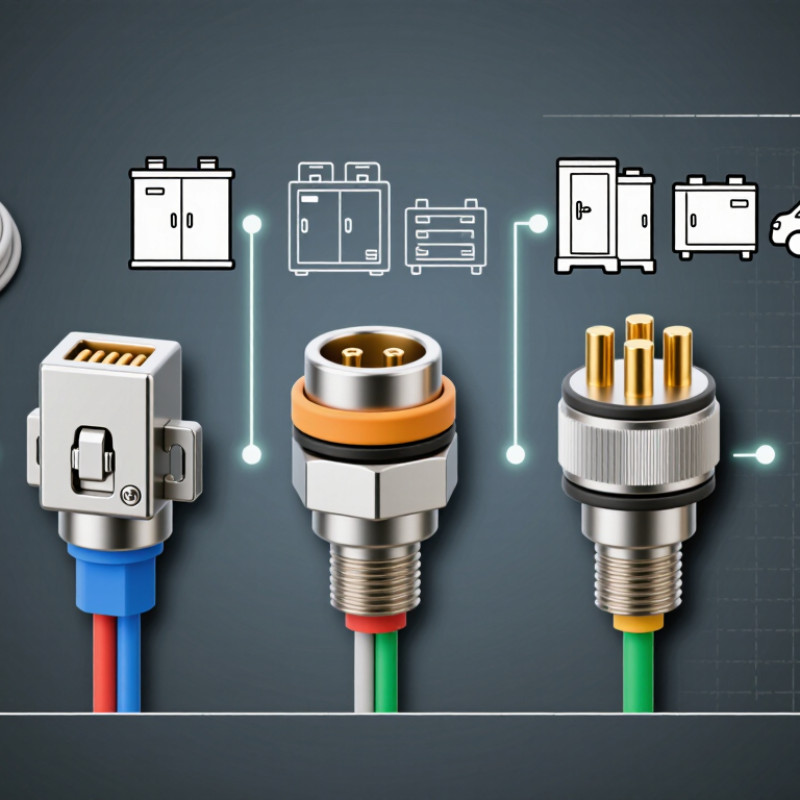
5 Best ESS Connectors for Energy Storage Systems?

ESS Connector Fundamentals: 1,500 V DC, Current Ratings, and IP Protection

Choosing the five best ESS connectors starts with the system’s electrical and environmental demands.

For many modern battery cabinets, connectors rated for 1,500 V DC provide useful voltage headroom. The rating must match the complete circuit, not only the battery module. DC arcs can persist longer than AC arcs. Proper touch protection is essential.

For practical ESS layouts, consider five connector types:

high-voltage cable connectors, busbar connectors, board-to-wire terminals, service disconnect connectors, and sealed feedthrough connectors.

Select current ratings above the expected continuous load. A 250 A connector may fail under repeated thermal cycling if the real operating current stays near its limit. Contact resistance matters. Small losses become noticeable in dense cabinets.

In field inspections, loose crimping and poorly supported cables remain common weaknesses. I have also seen installation teams trust a connector label without checking the cable size. That assumption needs review.

Tips Check voltage, continuous current, short-circuit withstand, conductor range, and locking design together.

Choose an IP rating based on actual exposure. IP65 may suit dust and water jets, while outdoor cabinets may need stronger protection. Inspect seals after every service operation.

Keep creepage and clearance distances clean. Do not ignore heat. A slightly warm terminal can signal rising resistance, although temperature readings alone do not reveal every defect.

Reliable selection requires the connector, cable, enclosure, and maintenance plan to work as one system.

Safety Standards for ESS Connectors: UL 1973, IEC 61984, and UL 4128

5 Best ESS Connectors for Energy Storage Systems?

Energy storage is scaling quickly. The IEA’s Batteries and Secure Energy Transitions report states that global battery storage must grow from about 85 GW in 2023 to 1,200 GW by 2030. Connector selection now affects safety, maintenance, and system availability. Five practical choices include touch-safe DC connectors, keyed connectors, locking connectors, high-current connectors, and service-disconnect connectors. Each must match voltage, current, short-circuit capacity, temperature, and enclosure conditions.

UL 1973 evaluates battery systems used in stationary applications. It addresses electrical, mechanical, and thermal safety, but it does not replace connector-specific evaluation. IEC 61984 focuses on connector safety requirements and tests. These include touch protection, mechanical strength, temperature rise, and connection reliability. UL 4128 is more directly relevant to DC connectors used in energy storage systems. Engineers should check creepage, clearance, retention force, polarity control, and resistance to repeated mating.

The U.S. Energy Information Administration reported approximately 15.5 GW of utility-scale battery storage capacity operating in 2023. It expected capacity to approach 30 GW by the end of 2024. More installations mean more field connections and more opportunities for installation errors. A connector can pass laboratory testing and still fail under poor torque control, contamination, or cable strain. Paper compliance is not field perfection. That gap deserves more attention. Verify the current certification scope, not only the printed standard number.

5 Best ESS Connectors for Energy Storage Systems? - Safety Standards for ESS Connectors: UL 1973, IEC 61984, and UL 4128

Connector Type Typical ESS Application Typical Voltage Range* Typical Current Range* Key Design Features Primary Safety Considerations Relevant Standards and Evaluation Best Fit
High-Voltage Battery Power Connector Battery modules, racks, DC combiner units, and power-conversion equipment 400–1,500 V DC 50–500 A Touch-safe contacts, keyed mating, mechanical locking, high creepage and clearance, optional HVIL and pre-charge contacts Protection against electric shock, accidental unmating under load, polarity reversal, arcing, and thermal overload Connector design may be evaluated using IEC 61984 requirements. The complete battery system may be assessed under UL 1973. Where within scope, UL 4128 can support evaluation of DC connectors used in ESS applications. High-voltage battery racks and modular storage cabinets
Busbar and Bolted Power Connection High-current links between cells, modules, busbars, disconnects, and inverters 48–1,500 V DC 100–1,000+ A Low-resistance conductive path, high short-circuit withstand capability, insulating covers, torque-controlled fasteners, and service disconnect provisions Correct torque, contact pressure, insulation spacing, corrosion control, fault-current containment, and prevention of exposed live metal IEC 61984 may apply when a separable connector assembly is used. UL 1973 evaluates the battery system and its interconnections as part of the overall construction. UL 4128 applicability depends on the connector construction and intended use. Stationary systems requiring very high continuous current and low electrical loss
Sealed Circular Power Connector Outdoor battery cabinets, mobile storage units, auxiliary power paths, and exposed equipment interfaces 24–800 V DC 10–250 A Circular keyed shell, sealing gaskets, threaded or bayonet coupling, strain relief, and optional shielding or auxiliary contacts Water and dust ingress, vibration, cable pullout, incorrect mating, corrosion, and derating caused by elevated ambient temperature IEC 61984 is relevant to connector safety and testing. IP performance is normally verified against the applicable enclosure or ingress-protection test requirements. UL 1973 remains a system-level battery standard rather than a connector-only rating. Outdoor or vibration-prone ESS equipment requiring environmental sealing
Low-Voltage Control and BMS Connector Battery-management systems, temperature sensors, contactor control, CAN communication, and interlock circuits 5–60 V DC 0.5–15 A Polarized housings, positive terminal retention, vibration resistance, compact size, shielding options, and separate signal or power contacts Signal integrity, pin-to-pin short prevention, EMC control, moisture resistance, and reliable low-level contact performance IEC 61984 can be relevant to separable connector safety. The BMS and battery protection functions are evaluated within the applicable system and battery safety architecture, including UL 1973 where applicable. Monitoring, control, communications, and safety-interlock wiring
Service Disconnect and Pre-Charge Connector Maintenance isolation, safe rack removal, inverter connection, and capacitor pre-charge circuits 400–1,500 V DC 10–350 A continuous; higher fault ratings by design Visible or mechanically indicated isolation, lockout provision, finger-safe construction, auxiliary contacts, pre-charge resistor path, and controlled sequencing DC arc interruption, stored energy, lockout/tagout, accidental energization, pre-charge timing, and short-circuit coordination UL 1973 may address the battery system's protective and disconnect architecture. IEC 61984 is relevant to connector construction where a separable connector is used. UL 4128 may be considered for qualifying applicable DC ESS connector assemblies. Systems prioritizing service safety, controlled energization, and rapid maintenance isolation

*Voltage and current values are representative engineering ranges, not universal ratings. Actual limits depend on contact size, conductor size, ambient temperature, duty cycle, altitude, short-circuit conditions, enclosure design, and the connector manufacturer's certified test data.

Five Leading ESS Connector Types for 100–500 A Battery Applications

For 100–500 A battery applications, the best ESS connector depends on current, service access, vibration, and enclosure space. The IEA reported that global battery storage additions reached about 42 GW in 2023, showing why dependable connection design matters at larger scale.

Five leading connector types deserve attention. Bolted busbar connectors suit fixed battery racks and high continuous current. Crimped cable lugs offer simple field installation when matched with correctly sized conductors. Pluggable high-current connectors support faster maintenance and module replacement. Touch-safe modular connectors reduce accidental contact inside crowded cabinets. Laminated busbar or flexible busbar connectors handle short internal paths and reduce cable congestion. Each option has limits.

Real installations expose the difference. A 300 A cable may run cool in a test room but heat noticeably inside a sealed cabinet. Poor crimp compression can create a small resistance point, then a large thermal problem. UL 9540A testing guidance emphasizes evaluating thermal propagation and system-level behavior, not only individual components. NREL research also highlights the importance of reducing resistive losses in battery power paths. Connector ratings should therefore cover continuous current, short-circuit withstand, temperature rise, ingress protection, and mating-cycle requirements. There is no universal winner. Even a premium-looking connector can fail when torque, plating, or cable bend radius is ignored. That detail is easy to miss.

5 Best ESS Connectors for Energy Storage Systems

Typical continuous-current design ranges for 100–500 A battery applications

Bolted busbar and flexible laminated-busbar connections are commonly selected for high-current battery assemblies because they provide a short, low-resistance current path. Threaded stud-and-lug connections offer flexible cable routing, while touch-safe HV plug and quick-disconnect power connectors improve serviceability and installation speed. Actual current capability depends on conductor size, contact resistance, temperature rise, enclosure design, voltage level, and the manufacturer’s certified rating.

Comparing ESS Connectors by Thermal Performance, Ingress Protection, and Cycle Life

5 Best ESS Connectors for Energy Storage Systems?

Choosing the best ESS connector requires more than checking current ratings. Thermal performance, ingress protection, and cycle life often determine field reliability. High-current copper compression connectors usually manage heat well when crimped correctly. A 200-amp connection should remain stable during repeated charge and discharge peaks. Loose hardware creates hot spots quickly.

Touch-safe high-voltage connectors add safer mating and clearer interlock feedback. Sealed circular connectors suit outdoor cabinets because strong IP protection limits dust and water entry. Liquid-cooled busbar connectors can support dense battery layouts, but they need careful hose inspection. Modular blade connectors simplify maintenance and reduce replacement time. Their contact pressure may weaken after frequent service cycles.

Thermal imaging helps reveal heat that a datasheet cannot show. Check the connector after a two-hour discharge at the expected load. IP ratings also depend on correct seals, cable diameter, and assembly torque. Cycle life testing should include vibration, humidity, and repeated mating, not only laboratory insertion counts. In practice, the “best” connector changes with enclosure design and maintenance habits. My own comparison would give more weight to stable contact resistance than impressive peak current. One weakness remains. Field data is often limited, so engineers should leave a safety margin and review early test results honestly.

Selecting the Best ESS Connector for Voltage, Space, Service, and Cost Requirements

Choosing the five best ESS connectors starts with the battery voltage, not the connector catalogue. For high-voltage battery strings, touch-safe, keyed connectors with strong locking systems are practical choices. They reduce accidental contact and prevent reversed mating. For compact cabinets, right-angle connectors save valuable depth. Busbar connectors suit dense modules and short current paths. Low-voltage signal connectors support battery management, temperature sensing, and communication lines. Screw-clamp terminals remain useful where low cost and simple field replacement matter.

Voltage rating needs a safety margin above the system’s maximum operating voltage. Current rating also requires careful checking under continuous load, peak load, and elevated cabinet temperatures. A connector rated at room temperature may perform differently inside a sealed enclosure. Look for low contact resistance, suitable creepage distance, durable insulation, and clear polarity coding. Small details matter. One loose crimp can create heat.

Service conditions often decide the final choice. Frequent module replacement favors tool-free locking and visible secondary locks. Outdoor installations need appropriate sealing against dust, water, and condensation. Space-limited racks may justify a higher connector cost if installation time falls. Still, expensive does not always mean better. I have seen designs overvalue mating speed while ignoring replacement availability. A better process compares total cost, including tooling, technician time, spare parts, inspection, and expected mating cycles. Prototype testing should include vibration, thermal cycling, and repeated connection tests before production approval.