2026 Best Heavy Steel Casting Manufacturer for Global Buyers
Choosing a Heavy Steel Casting Manufacturer in 2026 demands evidence, not polished promises. Global buyers need stable quality, traceability, and practical engineering support.
The World Steel Association reported 1,882.6 million tonnes of crude steel production in 2024. That scale signals continuing demand for cast components in energy, mining, shipbuilding, rail, and heavy machinery. However, steel volume alone proves little. A supplier may melt thousands of tonnes yet struggle with shrinkage, inclusions, dimensional drift, or inconsistent heat treatment. The OECD’s recent steel-market analysis also highlights margin pressure, excess capacity, and rising decarbonization expectations. These factors make process control increasingly important.
Dr. W. Edwards Deming, a leading manufacturing quality authority, said, “Quality comes not from inspection, but from the improvement of the production process.” His principle remains highly relevant to large castings. Buyers should examine furnace records, material certificates, simulation practices, non-destructive testing, machining capacity, and corrective-action history. Ask to see the details.
A serious Heavy Steel Casting Manufacturer should explain how it controls a 10-ton valve body, not only display a finished photograph. It should connect chemistry, pouring temperature, riser design, heat treatment, and final inspection. Independent testing adds confidence, especially for safety-critical components. Yet no manufacturer is perfect. Even a strong supplier can experience defects, delays, or communication gaps. The real question is how openly it reports problems and prevents recurrence. This 2026 guide compares capability, certification, production experience, delivery reliability, and long-term buyer support.
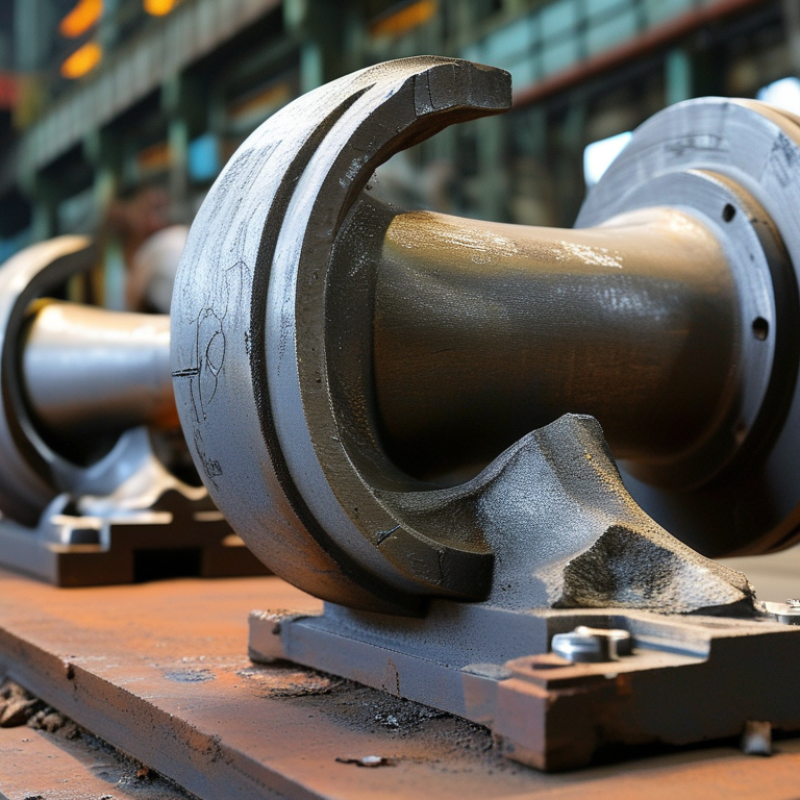
Heavy Steel Casting: Definition, Scope, and Industrial Applications
Heavy Steel Casting: Definition, Scope, and Industrial Applications
Heavy steel casting is the production of large steel components through controlled melting, mold filling, solidification, and heat treatment. These parts may weigh several tonnes and include crusher bodies, mill liners, turbine housings, gear blanks, and marine machinery frames. The World Steel Association reported approximately 1.88 billion tonnes of crude steel production in 2024. This scale supports a broad casting supply chain, but it does not guarantee reliable heavy components.
In practical purchasing, buyers should examine more than weight and chemistry. A qualified manufacturer should provide melt records, spectrographic analysis, ultrasonic testing, dimensional reports, and traceable heat-treatment charts. Thick sections often cool unevenly. Internal shrinkage can remain invisible without suitable inspection. That risk is easy to underestimate.
Heavy steel castings serve mining, energy, construction, shipbuilding, rail, and cement production. The International Energy Agency’s World Energy Outlook 2024 highlights continuing investment in grids and power infrastructure, where durable cast components support generators, valves, and large mechanical systems. Mining equipment also demands abrasion resistance and repairable designs. However, application data can be too general. A casting selected only by tensile strength may fail under impact, fatigue, or repeated thermal cycling. Global buyers should compare service conditions, testing depth, machining capability, and delivery controls before naming any manufacturer the best.
Core Capabilities of a Leading Heavy Steel Casting Manufacturer
A leading heavy steel casting manufacturer combines foundry experience with disciplined engineering. Its team reads drawings carefully, checks loading conditions, and selects steel grades for strength, wear, and service temperature. Large patterns require stable design. Small errors can become expensive defects.
Core capability begins with controlled melting and pouring. Operators monitor furnace temperature, chemical composition, and cooling behavior throughout production. Skilled pattern makers manage shrinkage allowances and complex internal cavities. Modern simulation can predict porosity, but experienced judgment remains essential. Not every result is perfect.
Quality control continues after shakeout. Technicians inspect surfaces, dimensions, and critical sections using visual checks, ultrasonic testing, magnetic particle testing, or radiography when appropriate. Heat treatment records show how each casting reached its required hardness and toughness. Mechanical tests verify tensile strength and impact performance. Traceable material certificates support reliable purchasing decisions.
A dependable manufacturer also provides machining, repair assessment, trial assembly, and export-ready protection. Engineers compare inspection data with the original drawing, not assumptions. They document deviations before shipment. Clear communication matters when tolerances, delivery dates, or design details change. Some projects reveal weaknesses only during installation, so feedback should return to the production team. This practical loop improves future castings, although it demands patience from every party.
Heavy Steel Casting Manufacturing Process and Production Equipment
Heavy steel casting begins with a controlled engineering review. Buyers should provide load conditions, working temperatures, dimensions, and machining allowances. Engineers then create a casting model, often with simulation support. This helps predict shrinkage, gas pockets, and hot spots before production. The pattern and core design must match the alloy and wall thickness. Small design changes can prevent major repair work later.
The process usually includes charge preparation, melting, refining, pouring, cooling, shakeout, and heat treatment. Large electric furnaces provide stable melting control for heavy sections. Ladles require careful lining inspection and temperature measurement. Molding equipment must withstand intense pressure and repeated handling. Cranes, turning devices, shot-blasting machines, and hydraulic cleaning tools support safe movement. Every transfer needs a defined lifting plan.
Quality control continues after the casting leaves the mold. Technicians inspect dimensions, surface condition, and internal soundness. Ultrasonic testing can reveal hidden discontinuities in thick areas. Hardness checks and chemical analysis confirm material consistency. Heat-treatment records should show actual time and temperature, not estimates. Traceability matters. A small documentation gap can weaken buyer confidence, even when the metal appears acceptable. No foundry gets every decision right; reviewing rejected castings often improves the next production cycle.
How Global Buyers Can Evaluate and Select a 2026 Supplier
Global buyers evaluating a heavy steel casting supplier in 2026 should examine evidence, not promises. Request recent project records, material certificates, and dimensional inspection reports. A capable foundry should explain its melting capacity, furnace control, pattern methods, and heat-treatment process clearly. Ask how it manages castings weighing several tons.
Quality systems need practical verification. Check whether each casting has a traceable heat number, inspection plan, and controlled repair procedure. Review ultrasonic, radiographic, magnetic particle, or visual testing records where applicable. Confirm the supplier understands relevant international standards and can prepare documents for customs and customer audits. Factory experience matters.
Visit the production site when possible. Observe molten-metal handling, mold preparation, machining, and storage conditions. Clean work areas do not prove everything. Ask difficult questions about rejected castings, corrective actions, and recurring defects. The answers can reveal more than polished presentations.
Commercial evaluation also deserves care. Compare tooling ownership, sample approval, production lead time, packaging, insurance, and port arrangements. A low quotation may hide weak inspection or expensive rework. Require a realistic schedule with milestone dates. Confirm how design changes are reviewed and approved.
No supplier is flawless. Even experienced teams can face shrinkage, distortion, or shipping delays. The important issue is whether risks are identified early and managed openly. Buyers should begin with a small validation order before committing to long-term volume. A supplier earns trust through consistent records, honest communication, and castings that perform in real service.
2026 Best Heavy Steel Casting Manufacturer for Global Buyers
Recommended supplier evaluation model for comparing heavy steel casting manufacturers
Quality and process control should receive the highest priority when evaluating heavy steel casting suppliers. Buyers can use this weighted model to compare documented quality systems, casting and machining capability, delivery reliability, regulatory compliance, and total cost. The percentages represent evaluation weights rather than data from any individual company.
